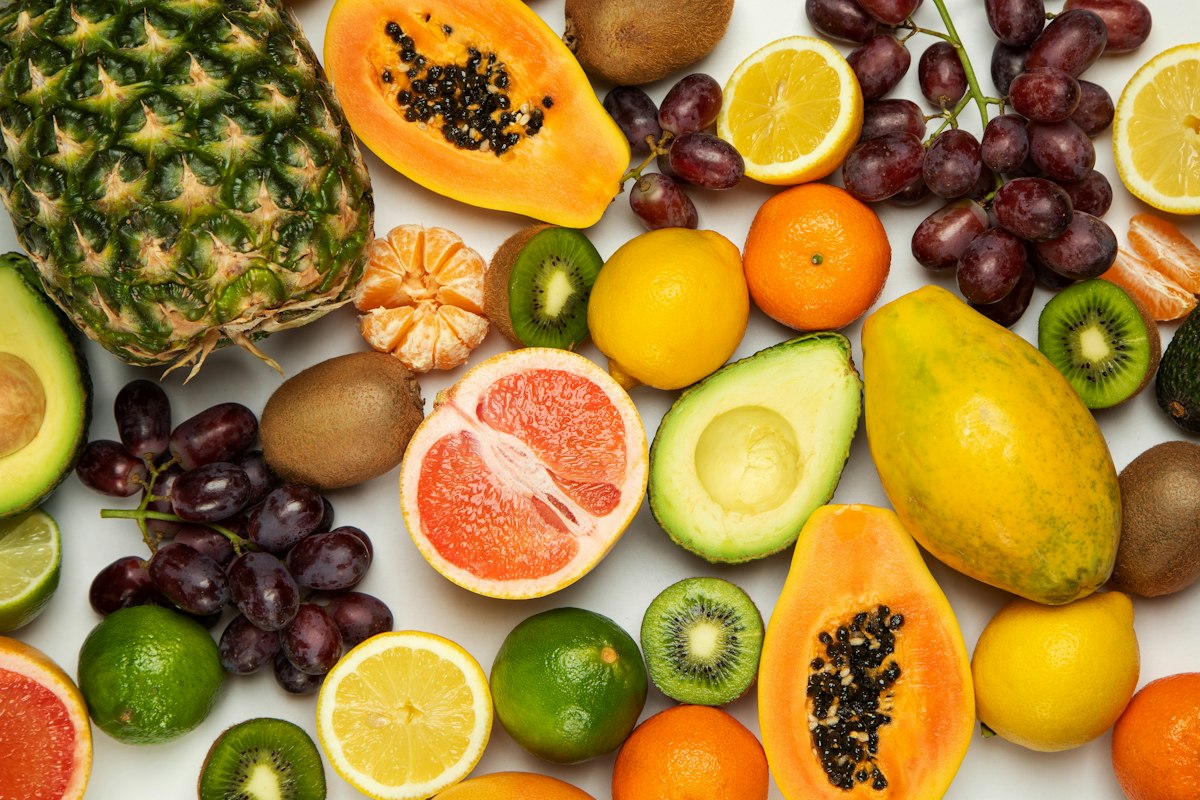
Fact check: "Every kidney patient must strictly limit potassium — no bananas, tomatoes or potatoes." Is that true?
The most widely shared rule in patient groups — yet KDOQI 2020 and KDIGO 2024 actually recommend individualising potassium to blood levels. We separate CKD 1–3, CKD 4–5, dialysis and transplant, explain who needs restriction and how much, and what blanket restriction can cost.
Check summary
| Item | Detail |
|---|---|
| Claim | "If you have kidney disease you cannot eat bananas, tomatoes, potatoes or oranges — the less potassium the better." |
| Verdict | Partly true / depends. Potassium restriction is only needed for patients whose blood potassium is high or at risk of rising. Most people with CKD stages 1–3 and transplant recipients with normal potassium do not need strict restriction; over-restriction cuts fruit and vegetable intake and is associated with worse outcomes. |
| Evidence level | B (moderate): guideline recommendations rest on observational studies and small trials; no large randomised trial has compared strict restriction with liberal intake on hard outcomes. |
| Applies to | All CKD stages, hemodialysis / peritoneal dialysis, kidney transplant (addressed separately below) |
| Limits & cautions | Individual potassium is strongly affected by drugs (ACEi/ARB, MRA, tacrolimus, trimethoprim), constipation, acidosis and glucose. This article cannot replace advice from your own team based on your labs. |
| Checked on | 2026-10-13 |
Where the claim comes from
Renal-diet education from the 1980s–2000s was written mainly for dialysis patients, with "high-potassium food lists" treated as universal rules. When reposted online, the words "dialysis patients" are often dropped and it becomes "kidney patients cannot eat…".
What the evidence says
1. Guidelines: individualise to serum potassium, do not restrict everyone
- KDOQI 2020 Nutrition Guideline: for CKD 3–5D and transplant, "adjust dietary potassium intake to maintain serum potassium within the normal range"; no universal daily ceiling is given, and the evidence linking intake to serum potassium is rated limited (OPINION).
- KDIGO 2024 CKD Guideline: encourages a plant-rich diet with more fruit and vegetables; restrict high-potassium foods only in people with hyperkalaemia or at risk; be cautious with potassium-based salt substitutes.
- KDIGO 2009 transplant guideline and most centres: a normal healthy diet after transplant if potassium is normal; monitor on tacrolimus/cyclosporine.
2. Dietary potassium and serum potassium are only weakly linked
- A 2021 systematic review (Ramos et al., Nephrol Dial Transplant) in CKD and dialysis populations found the association between dietary potassium intake and serum potassium very weak or non-significant; kidney function, drugs, acidosis and constipation matter more.
- A 2020 meta-analysis (Morris et al., J Ren Nutr) reached a similar conclusion: higher dietary potassium did not consistently translate into higher serum potassium in CKD.
3. The cost of over-restriction
- Prospective cohorts (e.g., CRIC; fruit-and-vegetable analyses) show that higher fruit and vegetable intake in CKD is associated with lower mortality and slower progression — observational, so not proof of causation, but consistent in direction.
- Alkali from produce helps metabolic acidosis: small randomised trials (Goraya et al., 2013–2019) found 2–4 servings/day improved acidosis in CKD 3–4 without causing hyperkalaemia (patients with baseline K >4.6 were excluded).
- Potassium from whole foods is about 50–60% absorbed, versus nearly 100% from supplements and potassium additives in processed foods (potassium phosphate, potassium chloride) — the more overlooked source.
Four populations, four answers
| Population | Need to restrict? | In practice |
|---|---|---|
| CKD 1–3, normal K | Usually no | Balanced produce intake; avoid K-based salt substitutes and supplements; check K at visits |
| CKD 4–5 (pre-dialysis) | Depends on K | If K >5.0–5.5, dietitian-guided adjustment; fix constipation, acidosis and drugs first |
| Hemodialysis | Usually yes, degree varies | K peaks after the 2-day weekend gap; portion control, leaching, avoid dried fruit/juice; new binders (patiromer, SZC) allow liberalisation for some |
| Peritoneal dialysis | Often no — may be low | Daily clearance; 10–30% become hypokalaemic and need more potassium |
| Transplant | No if K normal | Tacrolimus raises K; watch with ACEi/ARB or co-trimoxazole; regular labs, no dialysis-style restriction |
Bottom line
"Everyone with kidney disease must strictly limit potassium" applies dialysis-era rules to everyone. The accurate version: decide by blood potassium, not by diagnosis. If your potassium has always been normal, do not avoid produce because of an online list; if you are on dialysis with high potassium, discuss portions and cooking with a dietitian rather than banning foods outright.
References
- Ikizler TA, et al. KDOQI Clinical Practice Guideline for Nutrition in CKD: 2020 Update. Am J Kidney Dis. 2020;76(3 Suppl 1):S1-S107.
- KDIGO 2024 Clinical Practice Guideline for the Evaluation and Management of CKD. Kidney Int. 2024;105(4S):S117-S314.
- Ramos CI, et al. Does dietary potassium intake associate with hyperkalemia in patients with CKD? Nephrol Dial Transplant. 2021;36(11):2049-2057.
- Morris A, et al. Effect of dietary potassium restriction on serum potassium, disease progression, and mortality in CKD: systematic review and meta-analysis. J Ren Nutr. 2020;30(4):276-285.
- Goraya N, et al. Treatment of metabolic acidosis in stage 3 CKD with fruits and vegetables or oral bicarbonate. Kidney Int. 2014;86(5):1031-1038.
- Kelly JT, et al. Healthy dietary patterns and risk of mortality and ESRD in CKD: meta-analysis of cohort studies. Clin J Am Soc Nephrol. 2017;12(2):272-279.
- Picard K. Potassium additives and bioavailability. J Ren Nutr. 2019;29(4):350-353.
- KDIGO Transplant Work Group. KDIGO Clinical Practice Guideline for the Care of Kidney Transplant Recipients. Am J Transplant. 2009;9(Suppl 3):S1-S155.
This article compiles publicly available medical information for educational purposes only and is not medical advice. For any health concern, please consult a qualified healthcare professional.
Articles liés
Fact check: Is there research behind "cordyceps, reishi and astragalus protect the kidneys and lower creatinine"?
The supplement category most often sold to kidney patients in Asia. We reviewed the Cochrane systematic reviews and Chinese randomised trials: low-quality evidence suggests cordyceps preparations may slightly lower creatinine, but trials were small, short and reported no hard outcomes — and for transplant recipients there are immune-stimulation and drug-interaction concerns.