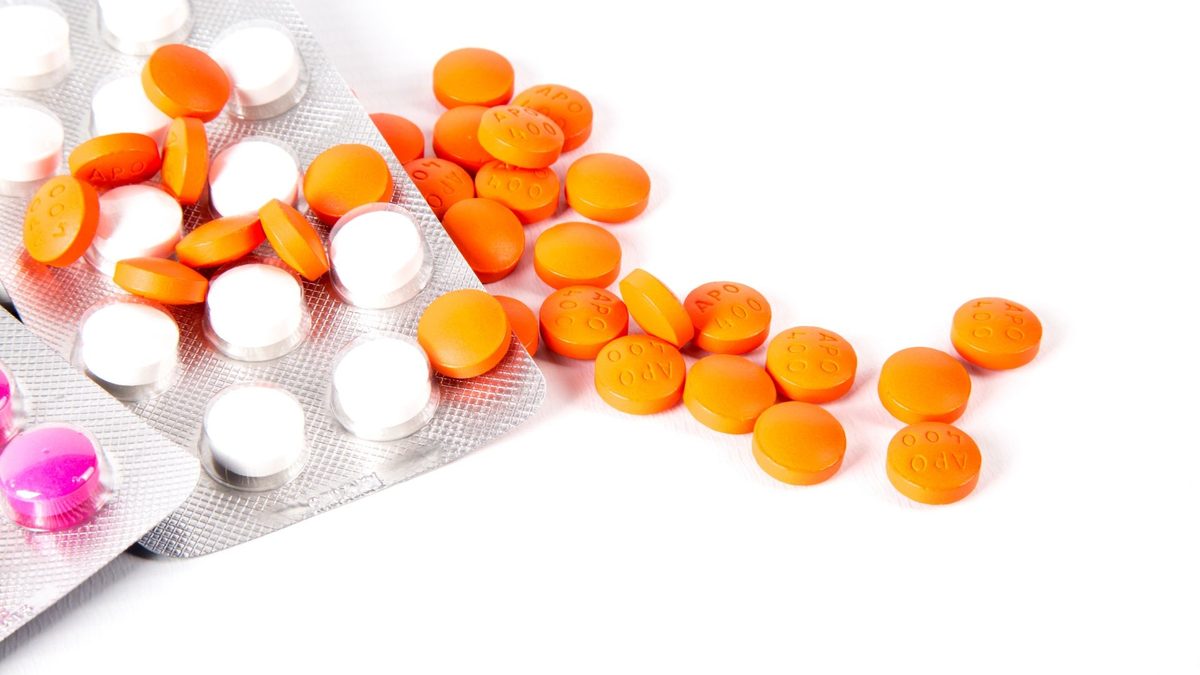
Pain relief with kidney disease: why NSAIDs are risky, is acetaminophen safe, do patches count, and the "triple whammy"
Headache, joint pain, a cold — one casual painkiller can be the start of acute kidney injury for a kidney patient. Based on KDIGO, FDA labels and the BMJ: which drugs are NSAIDs (including many cold remedies), at what eGFR guidelines say "avoid", the ACEi/ARB + diuretic + NSAID triple whammy, the safety limits of acetaminophen and topical agents, and sick-day rules.
Why are painkillers especially dangerous for the kidneys?
The kidneys receive about 20% of cardiac output every minute and rely on fine blood-flow regulation to keep filtering. Non-steroidal anti-inflammatory drugs (NSAIDs) block prostaglandins — the very substances the kidney uses to "prop open" the afferent arteriole and maintain flow when blood pressure is low, the body is dehydrated or kidney function is already reduced. Remove them and the glomerular filtration rate can fall abruptly. That is the main mechanism of NSAID-induced acute kidney injury (AKI).
Long-term NSAID use is also linked to chronic interstitial nephritis, worsening hypertension, oedema and hyperkalaemia.
Which drugs are NSAIDs? Many people don't realise cold remedies contain them
| Class | Common ingredients |
|---|---|
| Traditional NSAIDs | ibuprofen, diclofenac, naproxen, mefenamic acid, ketoprofen, indomethacin, piroxicam, etodolac, meloxicam |
| COX-2 selective | celecoxib, etoricoxib |
| High-dose aspirin | aspirin at analgesic/anti-inflammatory doses (low-dose 75–100 mg for cardiovascular prevention is a separate matter) |
| Combination cold/period-pain products | many contain ibuprofen or diclofenac; packaging often shows only a brand name |
COX-2 selective agents carry renal risk similar to traditional NSAIDs — they are not the "safer" option.
What the guidelines say
- KDIGO 2012 CKD guideline (Rec. 4.4.1): avoid prolonged NSAID use at eGFR <30; prolonged use not recommended at eGFR <60; avoid NSAIDs in people with eGFR <60 who also take RAAS blockers (ACEi/ARB) and diuretics.
- KDIGO 2024 CKD guideline: maintains this position and emphasises pausing potentially nephrotoxic drugs during illness and dehydration (sick-day guidance).
- Most product labels (FDA): in renal impairment use the lowest effective dose for the shortest time with renal monitoring; not recommended in severe impairment.
The "triple whammy"
One of the commonest AKI scenarios in nephrology:
NSAID + ACE inhibitor / ARB (blood-pressure drugs ending in -pril / -sartan) + diuretic
The three mechanisms stack: the diuretic lowers blood volume, the ACEi/ARB relaxes the efferent arteriole, the NSAID constricts the afferent arteriole — and glomerular pressure collapses.
A UK cohort study in the BMJ (Lapi et al., 2013; nearly 500,000 antihypertensive users) found the triple combination raised AKI risk by about 31%, and the risk was highest in the first 30 days of combined use (about 82% higher).
If you take an ACEi/ARB and a diuretic — as many kidney patients do — treat every NSAID as a drug you must ask about first.
Sick-day rules
Vomiting, diarrhoea, fever, or not being able to eat or drink put the body in a dehydrated state — a high-risk window for AKI. KDIGO 2024 suggests agreeing in advance with your doctor which medicines to pause at such times; commonly included are:
- NSAIDs
- ACEi/ARB
- Diuretics
- SGLT2 inhibitors
- Metformin (lactic-acidosis concern)
The key is to agree and write it down in advance, not to decide on your own while ill; medicines are usually restarted once you are eating and drinking again — ask your doctor about timing.
So what can you take?
Acetaminophen (paracetamol)
- Does not inhibit renal prostaglandins and, within recommended doses, is most nephrologists' first-line analgesic for kidney patients.
- General adult maximum 4 g per day (FDA label); be more conservative with long-term use, liver disease or alcohol (many clinicians advise ≤3 g/day).
- Watch for combination products that also contain acetaminophen to avoid unintentional overdose.
- The historical evidence that "heavy long-term analgesic use damages kidneys" (analgesic nephropathy) relates mainly to phenacetin and combination analgesics; single-agent acetaminophen at recommended doses carries low renal risk.
Topical NSAIDs (patches, gels)
- Systemic absorption is roughly 5–10% of oral dosing, so renal risk is much lower — but not zero, especially over large areas, for long periods or with several patches at once.
- A reasonable first choice for localised joint pain, but still tell your doctor.
Others
- Neuropathic pain (e.g. diabetic neuropathy): gabapentin/pregabalin must be dose-reduced by eGFR, otherwise drowsiness, dizziness and even confusion are common.
- Opioids: metabolites of tramadol, codeine and morphine accumulate in renal impairment and require dose reduction or a switch (hydromorphone, fentanyl and buprenorphine are less affected by kidney function); always prescribed and monitored by a doctor.
- Non-drug options: heat/ice, physiotherapy, exercise and cognitive-behavioural therapy all have evidence for chronic pain.
One sentence before buying any painkiller
"I have chronic kidney disease, my eGFR is ___, and I take ___ (blood-pressure drug / diuretic). Is this painkiller OK for me?"
That sentence lets the pharmacist steer you away from NSAIDs and combination traps.
References
- KDIGO 2012 Clinical Practice Guideline for the Evaluation and Management of CKD (Rec. 4.4.1). Kidney Int Suppl 2013;3:1–150. https://kdigo.org/guidelines/ckd-evaluation-and-management/
- KDIGO 2024 Clinical Practice Guideline for the Evaluation and Management of CKD — Chapter 4 (medication management, sick-day guidance). Kidney Int 2024;105(4S):S117–S314. https://doi.org/10.1016/j.kint.2023.10.018
- Lapi F, Azoulay L, Yin H, Nessim SJ, Suissa S. Concurrent use of diuretics, ACE inhibitors, and ARBs with NSAIDs and risk of acute kidney injury: nested case-control study. BMJ 2013;346:e8525. https://doi.org/10.1136/bmj.e8525
- U.S. FDA. Acetaminophen Information. https://www.fda.gov/drugs/information-drug-class/acetaminophen-information
- National Kidney Foundation. Pain Medicines (Analgesics). https://www.kidney.org/atoz/content/painmeds_analgesics
- Davison SN, et al. Executive summary of the KDIGO Controversies Conference on Supportive Care in CKD (pain management). Kidney Int 2015;88:447–459. https://doi.org/10.1038/ki.2015.110
This article compiles publicly available medical information for educational purposes only and is not medical advice. For any health or medication question, please consult a qualified healthcare professional.
Articoli correlati
Before your CT, cardiac cath or MRI: iodinated and gadolinium contrast — risks, prevention and the questions kidney patients should ask
Contrast media are one of the commonest sources of avoidable kidney injury for people with CKD. Based on the KDIGO 2012 AKI guideline and the ACR Manual on Contrast Media: iodinated-contrast risk by eGFR, the three pillars of prevention (hydration, dose, no NSAIDs), whether to stop metformin, group I vs group II gadolinium agents and nephrogenic systemic fibrosis, plus the newer evidence that risk was overestimated — and its limits.

Blood pressure in CKD: why the target is "<120", how to measure at home so it counts, and why one normal reading is no reason to stop your ACEi/ARB
Hypertension is both a cause and a consequence of kidney disease. The KDIGO 2021 blood-pressure guideline suggests a standardized systolic BP below 120 mmHg — but that target only applies to a correctly taken reading. This article covers the SPRINT evidence, a seven-step measurement technique, how to bring a home log to your visit, what to do when creatinine or potassium rise on an ACEi/ARB, and sodium targets.
Anemia in CKD: why kidney patients become anemic, iron first or injections, and what the new oral HIF drugs are
Constant fatigue and breathlessness on the stairs may be renal anemia, not "just age". Based on the KDIGO anemia guideline: definition and symptoms, why iron comes first, why the ESA hemoglobin target is not "the higher the better", the evidence and concerns around oral HIF-PH inhibitors, and what to ask at your visit.
