
Why Should Kidney Patients Exercise, and What Do They Gain? From KDIGO Guidelines to 2024 Systematic Reviews — An Evidence-Based Answer
Many kidney patients are told to "rest more", yet three decades of research agree: regular aerobic and strength exercise lowers mortality, improves heart and lung function, fights sarcopenia, stabilises blood pressure and glucose, eases depression and sleep, and even makes dialysis more efficient. We summarise KDIGO 2024, KDOQI, Cochrane and major meta-analyses to answer "why move" and "what you get".
One-line conclusion: for people with CKD, on dialysis or after transplant, the risk of not exercising is far greater than the risk of exercising. KDIGO 2024 recommends at least 150 minutes per week of moderate-intensity aerobic activity plus strength training, adapted to cardiovascular and physical tolerance. This article is not a training plan (the next three cover dialysis, diabetes and transplant specifically) — it answers "why" first.
1. What is happening to a kidney patient's body?
Falling kidney function does more than reduce "detox". It quietly dismantles muscle and fitness from several directions:
| Mechanism | What happens | Consequence |
|---|---|---|
| Uraemic toxins and chronic inflammation | IL-6, TNF-α rise and speed up muscle protein breakdown | Muscle loss 2–3× faster than peers |
| Metabolic acidosis | Acidic blood is buffered by breaking down muscle | Sarcopenia, weakness |
| Insulin resistance | Muscle responds poorly to insulin | Less muscle synthesis, higher glucose |
| Protein restriction + poor appetite | Inadequate intake | Protein-energy wasting (PEW) |
| Dialysis itself | 6–12 g of amino acids lost per HD session; 4 hours sitting | Net protein loss, deconditioning |
| Steroids, calcineurin inhibitors (post-transplant) | Muscle breakdown, fat gain, bone loss | Central obesity, osteoporosis, sarcopenia |
| Anaemia, reduced cardiac function | Poor oxygen delivery | Breathless after a few steps → "the less you move, the less you can move" |
Result: dialysis patients' peak oxygen uptake (VO₂ peak) averages only 50–60% of healthy peers, about 40% meet sarcopenia criteria, and sarcopenia is an independent predictor of death in kidney disease — regardless of eGFR or age, less muscle means higher mortality.
2. What exercise changes — the evidence
1. Living longer
- DOPPS (Tentori et al., 2010; 20,920 HD patients): regular exercisers had 27% lower all-cause mortality; even once a week helped.
- Taiwan NHI cohort (Chen et al., 2014; 6,363 CKD patients): exercising ≥3×/week was associated with significantly lower 5-year mortality.
- Cochrane 2022 (Bernier-Jean et al., 128 RCTs, 11,000+ dialysis patients): exercise training improves physical function, depression and quality of life (moderate certainty); RCT evidence on mortality is still insufficient (trials too short), but observational data are consistent.
2. Heart and vessels
- 3–6 months of aerobic training raises VO₂ peak by 10–20% in CKD (Heiwe & Jacobson, Cochrane 2011).
- Systolic blood pressure falls 5–6 mmHg on average — equivalent to one antihypertensive drug.
- Arterial stiffness (pulse-wave velocity) and left-ventricular hypertrophy improve — the two main drivers of cardiac death on dialysis.
3. Muscle and function
- 12 weeks of resistance training increases thigh muscle cross-sectional area by 5–10% and strength by 20–30% in CKD (Cheema et al., PEAK trial, 2007).
- Six-minute walk distance rises 50–70 m — the difference between "afraid to go out" and "can get to the market alone".
- Fighting sarcopenia is the single biggest reason: muscle is the protein reserve, the largest glucose sink, and the cushion against falls and fractures.
4. Glucose and blood pressure
- Insulin sensitivity improves for 24–48 h after a session; HbA1c falls 0.5–0.7% in diabetic kidney disease.
- Contracting muscle takes up glucose through GLUT4 without insulin — the physiology behind "eat, then move" for diabetic kidney patients.
5. Slowing kidney decline
- 2023 meta-analysis (Zhang et al., Am J Kidney Dis): exercise slowed eGFR decline in CKD 3–4; some trials showed eGFR rising 2–3 mL/min, probably via blood pressure, inflammation and insulin resistance.
- Exercise does not "hurt the kidney by raising creatinine": more muscle slightly raises creatinine — a limitation of the eGFR formula, not kidney damage (cystatin C resolves it).
6. Dialysis efficiency
- Intradialytic exercise — 30–60 min on a recumbent bike in the first two hours of HD — increases muscle blood flow and flushes toxins into the blood, raising Kt/V by about 10% (Parsons et al., 2006; Sheng et al., meta-analysis 2014).
- Fewer intradialytic hypotension episodes and cramps; less post-dialysis fatigue.
7. Mind and quality of life
- Depression affects 20–30% of dialysis patients; exercise improves depression scores with an effect size of 0.4–0.6, comparable to a mild antidepressant.
- Sleep, restless legs and fatigue improve.
8. Transplant waiting list and after
- Fitter patients pass transplant work-up more easily (many centres use 6-minute walk, grip strength and frailty scores).
- Regular exercisers after transplant gain less weight, develop less new-onset diabetes, have fewer cardiovascular events and more stable graft function (Kang et al., meta-analysis 2020).
3. "I thought kidney patients should move less" — myths
Myth 1: Bad kidneys need rest. → Rest is for acute illness (infection, AKI, fresh surgery). In stable disease, sitting is the main accelerator of sarcopenia and cardiovascular disease. KDIGO lists physical activity as a CKD lifestyle prescription.
Myth 2: Exercise raises creatinine and damages kidneys. → Creatinine rises transiently after hard exercise (muscle metabolism) — not kidney injury. Long term, exercise protects the kidney. Just avoid strenuous exercise the day before a blood test.
Myth 3: You can't lift weights with a fistula. → Once mature, a fistula can be trained — grip exercises even help it develop (see part 3). Avoid compression, straps across the arm, blood pressure cuffs and needles on that arm.
Myth 4: I'm too tired after dialysis. → Exactly why training belongs during dialysis or on non-dialysis days; studies show fatigue falls over time.
Myth 5: Too old to build muscle. → Strength training in 90-year-olds (Fiatarone, 1990) increased strength by 170%. Muscle responds at any age, just more slowly.
Myth 6: After transplant I must protect the kidney and not exercise. → The graft sits in the pelvis and should avoid direct blows (boxing, rugby), but other activity is unrestricted. KDIGO's transplant guideline recommends starting early (usually 4–8 weeks).
4. How much? What the guidelines say
| Source | Recommendation |
|---|---|
| KDIGO 2024 CKD | ≥150 min/week moderate intensity, adapted to tolerance; avoid sedentary time |
| KDOQI 2005 CV guideline (dialysis) | 30 min moderate activity on most, preferably all, days |
| ACSM chronic disease | Aerobic + strength (2–3×/week, major muscle groups) + flexibility + balance |
| ACSM × National Kidney Foundation | Intradialytic exercise is safe and effective and should be routine care |
| KDIGO 2009 transplant | Regular exercise ≥150 min/week after transplant |
"Moderate" means you can talk but not sing.
5. When to check with your doctor first
- Uncontrolled hypertension (>180/110) or severe hypotension
- Unstable angina, recent MI, severe aortic stenosis, uncontrolled arrhythmia
- Potassium >6.0 or <3.0 mmol/L (exercise transiently raises potassium)
- Glucose >300 mg/dL with ketones, or frequent hypoglycaemia
- Fever/acute infection, peritonitis, access infection
- Severe anaemia (Hb <8 g/dL)
- Unhealed wounds, recent surgery (walking only for 4–6 weeks after transplant)
- Severe osteoporosis or recent fracture
- Proliferative retinopathy (avoid breath-holding, inversion, high intensity)
General rule: start low, progress slowly, stop with symptoms — chest pain, extreme breathlessness, dizziness, irregular heartbeat, fistula pain or swelling — stop and tell your team.
6. Three steps to start today
- Measure: how many minutes can you walk, how many seconds for 5 sit-to-stands, your grip strength (most dialysis units have a dynamometer).
- Walk: 10 min daily; 15 min after a week; 20 after two. Walking to the unit and slowly home counts.
- Add strength: from week 3, twice a week — sit-to-stand, wall push-ups, band rows, 10–15 reps × 2 sets.
The next three articles cover dialysis patients, diabetic kidney patients and transplant recipients in detail, followed by a fitness know-how piece.
Sources
- KDIGO. 2024 Clinical Practice Guideline for the Evaluation and Management of CKD, Chapter 3. Kidney Int 2024;105(4S):S117–S314. https://kdigo.org/guidelines/ckd-evaluation-and-management/
- Bernier-Jean A, et al. Exercise training for adults undergoing maintenance dialysis. Cochrane Database Syst Rev 2022;1:CD014653.
- Heiwe S, Jacobson SH. Exercise training for adults with chronic kidney disease. Cochrane Database Syst Rev 2011;10:CD003236.
- Tentori F, et al. Physical exercise among participants in the DOPPS. Nephrol Dial Transplant 2010;25:3050–3062.
- Chen IR, et al. Association of walking with survival and RRT among patients with CKD stages 3–5. Clin J Am Soc Nephrol 2014;9:1183–1189.
- Cheema B, et al. PEAK: resistance training during hemodialysis. J Am Soc Nephrol 2007;18:1594–1601.
- Sheng K, et al. Intradialytic exercise in hemodialysis patients: meta-analysis. Am J Nephrol 2014;40:478–490.
- Zhang F, et al. Effect of exercise on kidney function in CKD: meta-analysis. Am J Kidney Dis 2023.
- Kang AW, et al. Exercise and kidney transplant recipients: meta-analysis. Transplantation 2020;104:e277.
- Sabatino A, et al. Sarcopenia in chronic kidney disease. J Nephrol 2021;34:1347–1372.
- K/DOQI. Clinical practice guidelines for cardiovascular disease in dialysis patients. Am J Kidney Dis 2005;45(4 Suppl 3).
- ACSM. Exercise Management for Persons with Chronic Diseases and Disabilities, 4th ed., 2016.
- Fiatarone MA, et al. High-intensity strength training in nonagenarians. JAMA 1990;263:3029–3034.
관련 글
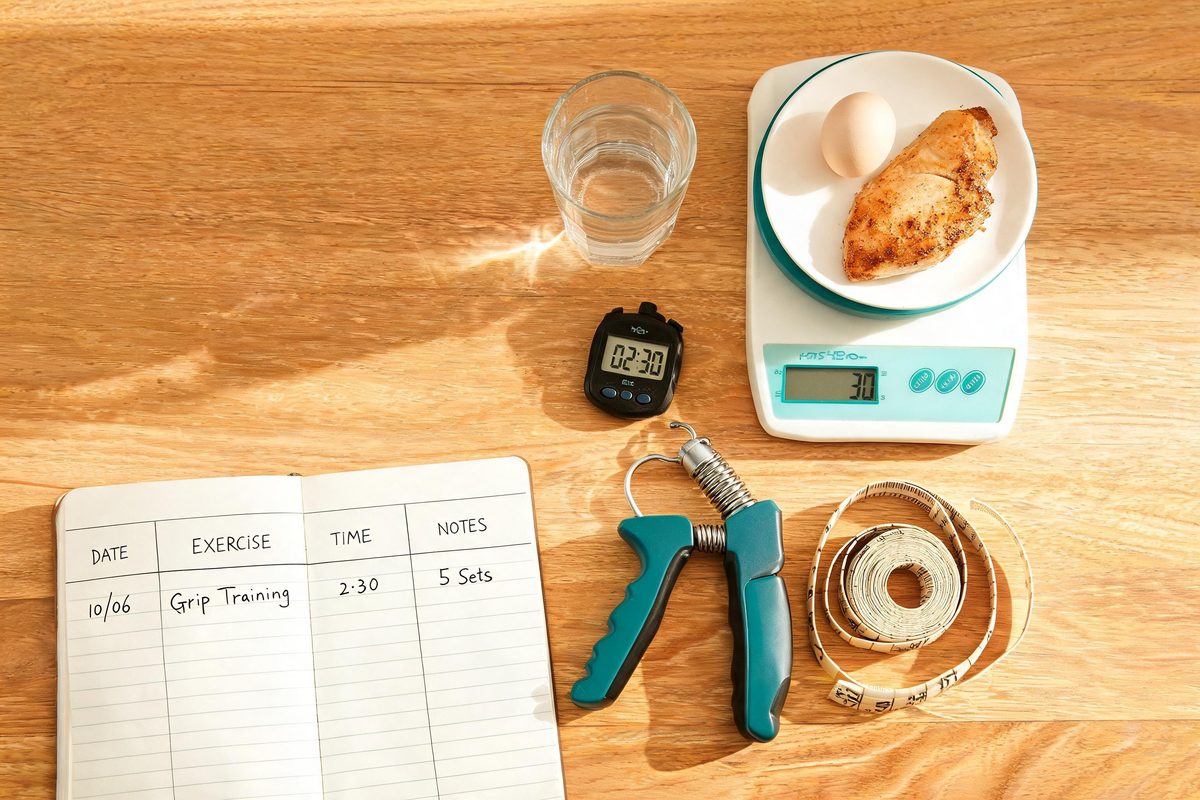
15 Practical Fitness Tips for Kidney Patients: Using RPE for Intensity, Progressive Overload, Protein Without Harming Your Kidneys, SARC-F Sarcopenia Self-Test, Warm-up & Breathing, Hydration and the Potassium in Sports Drinks
Once you know you *should* exercise, the real sticking points are how, how much, and what to eat. This article answers the 15 questions kidney patients ask most: the RPE scale, how much weight to add each week, protein targets for non-dialysis CKD / dialysis / transplant, what to eat after training, the 5-question SARC-F test, warm-up and cool-down, breathing, the potassium content of sports drinks, and which symptoms mean stop. Every tip cites its evidence.

How Should Kidney Transplant Recipients Train? Protecting the Graft, Steroid & Immunosuppressant Effects, Phase-by-Phase Post-Surgery Program, and Countering Post-Transplant Diabetes & Bone Loss
A successful transplant is not the finish line; it is the start of rebuilding a body that dialysis and medication have worn down. Based on the KDIGO transplant guideline and transplant-recipient exercise RCTs, this article explains where the graft sits and which movements to avoid; how prednisolone and tacrolimus affect muscle and glucose; what to train at 0–6 weeks, 6–12 weeks and beyond 3 months; and how training counters post-transplant diabetes, bone loss and cardiovascular risk.
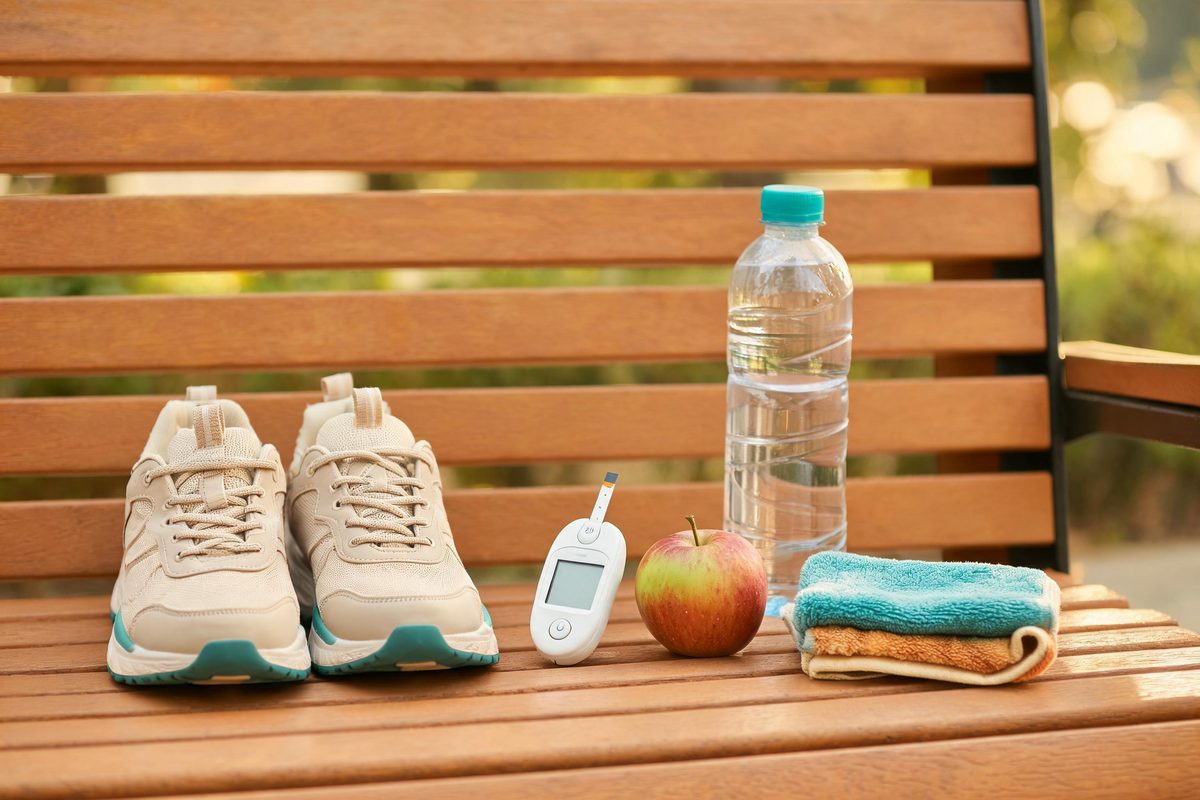
How Diabetic Kidney Patients Should Train: When to Check Glucose, When Not to Train, the Science of Post-Meal Walking, Protecting Feet and Eyes, and Adjustments for Insulin and SGLT2 Users
People with diabetes and kidney disease gain the most from exercise (glucose, blood pressure and albuminuria all improve) but must manage three special problems: hypoglycaemia, foot injury and retinopathy. Based on ADA 2025 and KDIGO 2022, this article explains how to read glucose before, during and after exercise, why post-meal walking works, when not to train, how insulin and each glucose-lowering drug class interact with exercise, and gives a sample week.