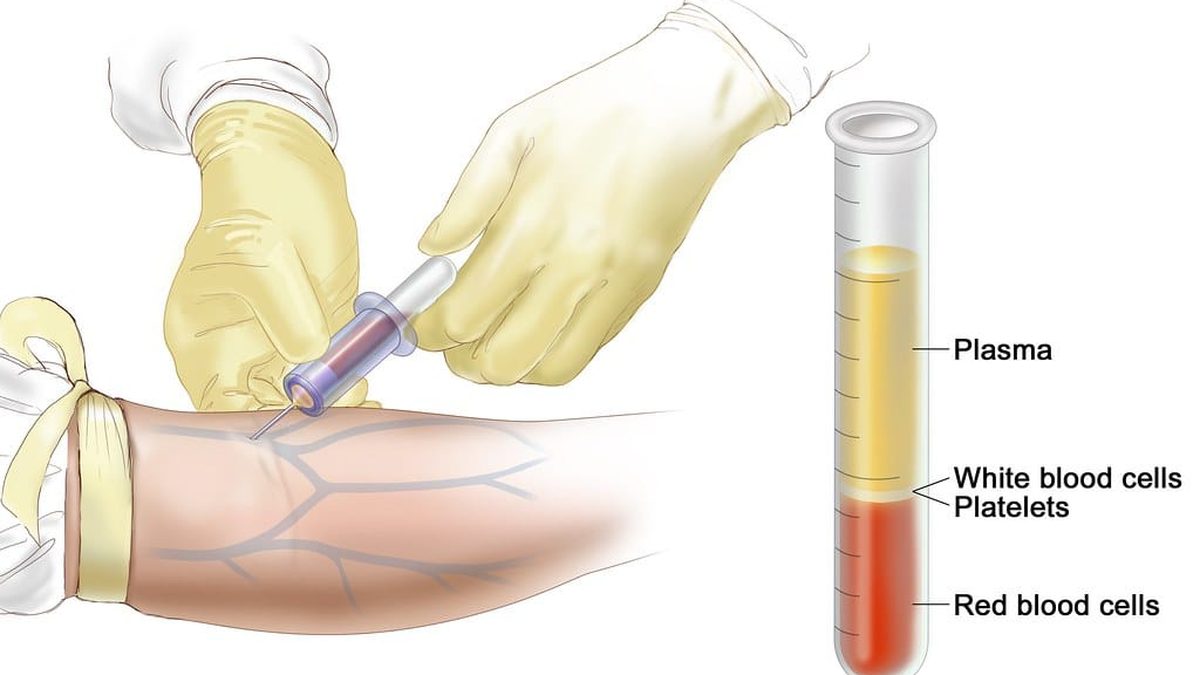
Constant fatigue and breathlessness on the stairs may be renal anemia, not "just age". Based on the KDIGO anemia guideline: definition and symptoms, why iron comes first, why the ESA hemoglobin target is not "the higher the better", the evidence and concerns around oral HIF-PH inhibitors, and what to ask at your visit.
What is renal anemia?
The kidneys are not only filters; they secrete erythropoietin (EPO), the hormone that tells the bone marrow to make red cells. As kidney function falls, EPO production drops. Add shortened red-cell survival from uremic toxins, poor iron absorption and utilisation, and chronic inflammation, and you get renal anemia.
Definition (KDIGO 2012): hemoglobin (Hb) <13.0 g/dL in men, <12.0 g/dL in women.
Prevalence rises clearly from CKD stage 3 and affects most people at stage 5 and on dialysis.
Symptoms are often dismissed as "age" or "overwork"
Fatigue, breathlessness on exertion, feeling cold, dizziness, poor concentration, fast heartbeat, pale skin. Because it develops slowly, many people adapt without noticing until a blood test shows Hb of 8–9.
Long-standing anemia strains the heart (left-ventricular hypertrophy), lowers quality of life and raises hospitalisation risk — so it is worth treating, but in the right order.
Step one: check iron before anything else
KDIGO advises assessing iron status before starting or adjusting treatment:
| Marker | Meaning | Common treatment threshold |
|---|---|---|
| Transferrin saturation (TSAT) | Is enough iron being transported in the blood? | ≤30% |
| Ferritin | Is enough iron stored? | ≤500 ng/mL |
KDIGO 2012: if a rise in Hb or a lower ESA dose is desired, a trial of iron is reasonable when TSAT ≤30% and ferritin ≤500.
- Non-dialysis CKD: oral iron for 1–3 months first; switch to IV iron if ineffective or not tolerated.
- Hemodialysis: IV iron is usually more effective than oral (poor absorption, GI side effects).
- Many people improve on iron alone and never need an ESA right away.
Note: ferritin is an acute-phase reactant and rises falsely with inflammation or infection — read it together with TSAT, never alone.
Step two: ESAs (erythropoiesis-stimulating agents)
Common agents: epoetin alfa/beta, darbepoetin, methoxy polyethylene glycol-epoetin beta (Mircera), given subcutaneously or intravenously.
The Hb target is not "the higher the better"
This is the most important — and most misunderstood — point in renal anemia.
- KDIGO 2012: generally start an ESA only when Hb is <10 g/dL (individualised in non-dialysis patients by symptoms); in maintenance, do not deliberately raise Hb above 11.5 g/dL, and avoid exceeding 13 g/dL.
- The reason is three large randomised trials: CHOIR (2006), CREATE (2006) and TREAT (2009, 4,038 patients with diabetic CKD). Groups targeted to near-normal Hb (13–13.5) had more cardiovascular events, stroke or thrombosis, with no survival benefit. In TREAT, stroke risk in the darbepoetin arm was roughly double that of placebo.
- Current practice therefore keeps Hb in a "sufficient but not high" range (commonly 10–11.5) rather than chasing normal values.
Other ESA cautions
- Blood pressure may rise and needs monitoring.
- Use with particular care in active malignancy or recent stroke (KDIGO).
- ESA hyporesponsiveness (Hb stays low despite high doses) needs a cause: iron deficiency, inflammation/infection, hyperparathyroidism, bleeding, B12/folate deficiency, inadequate dialysis, drugs such as ACE inhibitors.
Step three (newer option): oral HIF-PH inhibitors
HIF-PH inhibitors (roxadustat, daprodustat, vadadustat and others) are oral drugs that stabilise hypoxia-inducible factor so the body produces more of its own EPO and uses iron better.
- Advantages: oral, no injections; may reduce IV iron needs; may work better in inflammatory states.
- Evidence: the ASCEND programme (daprodustat, NEJM 2021) showed Hb gains comparable to ESAs in dialysis patients, with major cardiovascular events "non-inferior" to ESAs.
- Concerns: in non-dialysis patients some trials (e.g. vadadustat's PRO2TECT) did not meet non-inferiority for cardiovascular safety; signals for thrombotic events and vascular-access thrombosis need longer follow-up. Approvals differ by country (e.g. the US FDA approved daprodustat in 2023 for dialysis patients only).
- Bottom line: an option, not a blanket replacement for ESAs; suitability depends on your kidney status, cardiovascular history and local approval — a decision for your doctor.
Not all anemia in CKD is renal anemia
KDIGO reminds clinicians to exclude other causes first:
- Gastrointestinal bleeding (peptic ulcer, colonic lesions; higher risk on anticoagulants during dialysis)
- Vitamin B12 or folate deficiency
- Hypothyroidism
- Hematological disease
- Drugs (some immunosuppressants such as mycophenolate and azathioprine suppress marrow)
If Hb drops quickly or the response to iron/ESA is poorer than expected, ask for a re-evaluation.
Transfusion: use sparingly
For anyone who may receive a kidney transplant, KDIGO advises avoiding transfusion where possible, because transfusions induce anti-HLA antibodies that make future matching harder and raise rejection risk. Transfusion is reserved for acute bleeding or severe symptoms.
Four questions for your next visit
- What are my TSAT and ferritin? Is my iron sufficient?
- What is my Hb target range, and why isn't it the normal value?
- If the ESA isn't working well, have we checked for bleeding, B12 and parathyroid problems?
- Am I a candidate for an oral HIF-PH inhibitor, and what is approved in our country?
References
- KDIGO Clinical Practice Guideline for Anemia in Chronic Kidney Disease. Kidney Int Suppl 2012;2:279–335. https://doi.org/10.1038/kisup.2012.37
- Singh AK, et al. Correction of Anemia with Epoetin Alfa in Chronic Kidney Disease (CHOIR). N Engl J Med 2006;355:2085–2098. https://doi.org/10.1056/NEJMoa065485
- Drüeke TB, et al. Normalization of Hemoglobin Level in Patients with CKD and Anemia (CREATE). N Engl J Med 2006;355:2071–2084. https://doi.org/10.1056/NEJMoa062276
- Pfeffer MA, et al. A Trial of Darbepoetin Alfa in Type 2 Diabetes and Chronic Kidney Disease (TREAT). N Engl J Med 2009;361:2019–2032. https://doi.org/10.1056/NEJMoa0907845
- Singh AK, et al. Daprodustat for the Treatment of Anemia in Patients Undergoing Dialysis (ASCEND-D). N Engl J Med 2021;385:2325–2335. https://doi.org/10.1056/NEJMoa2113379
- Chertow GM, et al. Vadadustat in Patients with Anemia and Non–Dialysis-Dependent CKD (PRO2TECT). N Engl J Med 2021;384:1589–1600. https://doi.org/10.1056/NEJMoa2035938
- KDIGO 2024 Clinical Practice Guideline for the Evaluation and Management of CKD. Kidney Int 2024;105(4S):S117–S314. https://doi.org/10.1016/j.kint.2023.10.018
This article compiles publicly available medical information for educational purposes only and is not medical advice. For any health or medication question, please consult a qualified healthcare professional.
관련 글
Before your CT, cardiac cath or MRI: iodinated and gadolinium contrast — risks, prevention and the questions kidney patients should ask
Contrast media are one of the commonest sources of avoidable kidney injury for people with CKD. Based on the KDIGO 2012 AKI guideline and the ACR Manual on Contrast Media: iodinated-contrast risk by eGFR, the three pillars of prevention (hydration, dose, no NSAIDs), whether to stop metformin, group I vs group II gadolinium agents and nephrogenic systemic fibrosis, plus the newer evidence that risk was overestimated — and its limits.

Blood pressure in CKD: why the target is "<120", how to measure at home so it counts, and why one normal reading is no reason to stop your ACEi/ARB
Hypertension is both a cause and a consequence of kidney disease. The KDIGO 2021 blood-pressure guideline suggests a standardized systolic BP below 120 mmHg — but that target only applies to a correctly taken reading. This article covers the SPRINT evidence, a seven-step measurement technique, how to bring a home log to your visit, what to do when creatinine or potassium rise on an ACEi/ARB, and sodium targets.
Pain relief with kidney disease: why NSAIDs are risky, is acetaminophen safe, do patches count, and the "triple whammy"
Headache, joint pain, a cold — one casual painkiller can be the start of acute kidney injury for a kidney patient. Based on KDIGO, FDA labels and the BMJ: which drugs are NSAIDs (including many cold remedies), at what eGFR guidelines say "avoid", the ACEi/ARB + diuretic + NSAID triple whammy, the safety limits of acetaminophen and topical agents, and sick-day rules.
