What Is a Kidney Transplant? From Evaluation and Waiting to Surgery and Lifelong Care
Kidney transplantation offers the best survival and quality of life for kidney failure, but it is not a cure — it exchanges one chronic condition for another that needs lifelong management. This article covers donor sources, matching, surgery, rejection, medications and long-term care.
Conteúdo
What Is a Kidney Transplant?
A healthy kidney — from a living or deceased donor — is surgically placed into a person with kidney failure.
Common misconceptions:
- The original kidneys usually stay. The new kidney goes in the lower abdomen (iliac fossa), connected to the iliac vessels and bladder. Native kidneys are removed only in special cases.
- Transplant is not a cure; it swaps one chronic state for another: from "uremia plus dialysis" to "normal kidney function plus lifelong immunosuppression."
- One kidney is enough for a normal life.
Why Is Transplant Preferred?
| Aspect | Dialysis | Transplant |
|---|---|---|
| Survival | 5-year survival for new dialysis patients in Taiwan ≈ 55% | 5-year survival after transplant in Taiwan ≈ 89% (NHI data) |
| Quality of life | Time, diet and fluid restricted | Freedom largely restored |
| Cardiovascular risk | Very high | Markedly reduced |
| Anemia, bone disease | Long-term medication | Mostly improve |
| Fertility | Difficult | Women often regain fertility |
| Long-term cost | High | High in year one, then lower than dialysis |
Even accounting for surgical risk, transplant recipients have lower long-term mortality than wait-listed dialysis patients.
Donor Sources
Deceased donation
- Brain death (DBD): Taiwan's main source; circulatory death (DCD) permitted since 2017
- Allocation by the Taiwan Organ Registry and Sharing Center, ranked by blood type, tissue match, waiting time, age
- About 8,000–9,000 people wait; only 200–300 deceased-donor kidney transplants per year; waits often exceed 5–10 years
Living donation
- Taiwan law: blood relatives within five degrees or spouse (married ≥ 2 years or with children)
- Paired kidney exchange permitted since 2019
- Advantages: short wait, scheduled surgery, better survival (US SRTR: 5-year graft survival in recipients aged 18–34 is 89.9% living vs. 82.5% deceased)
- Enables preemptive transplant before dialysis
- Healthy donors have long-term kidney function and lifespan similar to the general population, with lifelong follow-up
Matching
- ABO: same rules as transfusion; ABO-incompatible transplants now possible with pre-transplant plasmapheresis
- HLA: six antigens (A, B, DR); better match is better, but modern drugs reduce its impact
- Crossmatch: detects donor-specific antibodies (DSA); positive usually rules out transplant
- PRA: prior transfusion, pregnancy or transplant raises antibodies ("sensitization"), making matching harder
Recipient Evaluation
Cardiovascular (ECG, echo, stress test if high-risk), infection screening (hepatitis B/C, HIV, TB, CMV, EBV), cancer screening (prior cancer requires 2–5-year disease-free interval), urinary tract, dental, psychosocial (adherence, support), immunology (blood type, HLA, PRA). Age alone is not a contraindication.
Surgery
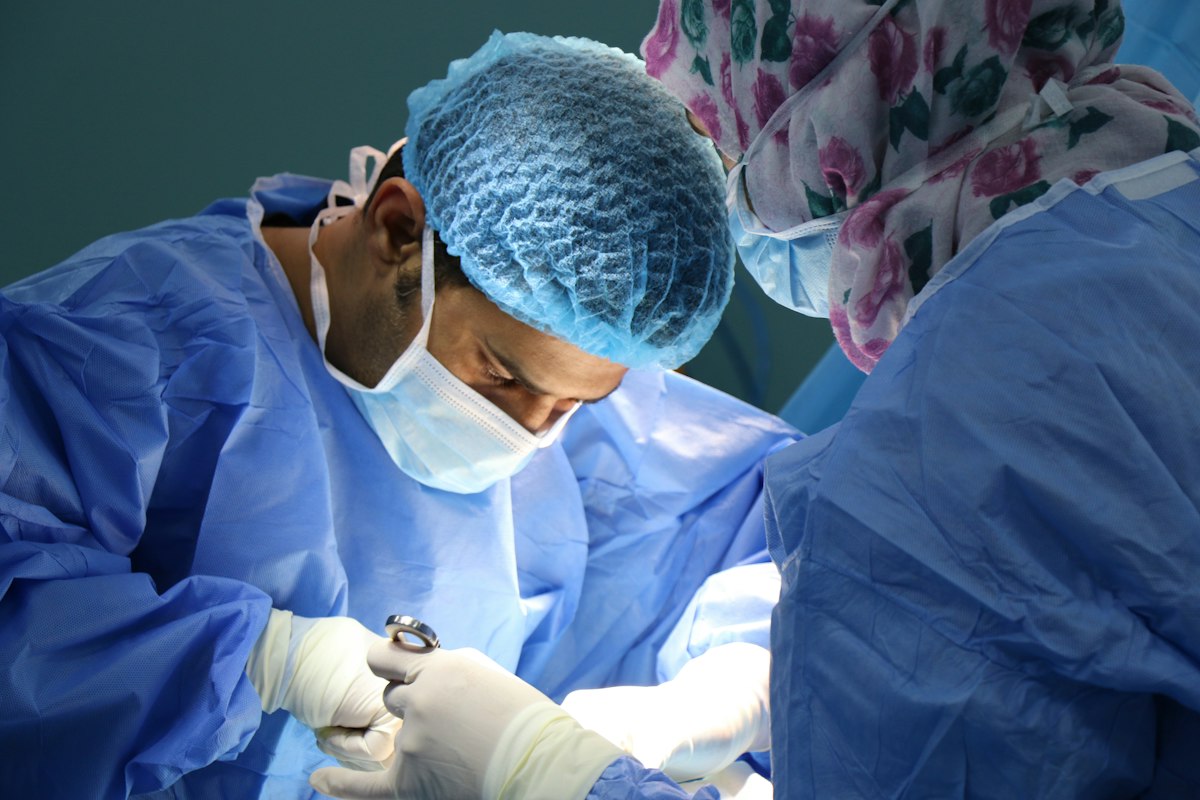
- General anesthesia, 3–4 hours; kidney placed in the iliac fossa
- Hospital stay 7–14 days
- Delayed graft function (DGF): dialysis still needed in week one; 20–30% of deceased-donor transplants, most recover within 1–3 weeks
Rejection
| Type | Timing | Treatment |
|---|---|---|
| Hyperacute | During surgery to hours | Now extremely rare thanks to crossmatching |
| Acute T-cell | Mostly first 3–6 months | High-dose steroids; ATG if resistant |
| Acute antibody-mediated | Any time | Plasmapheresis, IVIG, rituximab |
| Chronic | Months to years | No specific cure; prevention and early detection |
Rejection is often silent — detected by routine labs (rising creatinine), urinalysis, and biopsy. Never skip follow-up.
Immunosuppression
Induction: basiliximab or ATG. Maintenance (lifelong) triple therapy:
- Tacrolimus (or cyclosporine): trough monitoring; nephrotoxicity, hypertension, raised glucose, tremor
- Mycophenolate: diarrhea, low white cells, teratogenic (switch before pregnancy)
- Prednisolone: tapered; glucose, blood pressure, osteoporosis
Iron rules
- On time, never skipped, never self-adjusted
- Interactions: grapefruit, pomelo, starfruit, St John's wort, certain antibiotics and antifungals, herbal products all alter tacrolimus levels. Ask before any new drug or supplement
- On drug-level test days, blood draw first, then take the dose
Long-Term Risks and Care
Infection
- Month 1: surgical; months 1–6: opportunistic peak (CMV, BK virus, PJP) with routine prophylaxis; after 6 months: community infections
- Vaccines: inactivated recommended; live attenuated (MMR, varicella, yellow fever) prohibited after transplant
Cancer
Risk about 2–3× general population: skin cancer (sun protection, annual checks), PTLD (EBV-related), urothelial cancer (relatively common in Taiwan), liver, cervical. Regular screening matters more.
Cardiovascular and metabolic
- Post-transplant diabetes: 10–30%, mainly from tacrolimus and steroids
- Hypertension, dyslipidemia, obesity
Graft monitoring
Creatinine/eGFR, proteinuria, BK virus (first 2 years), DSA, recurrence of original disease (FSGS, IgA nephropathy).
Bone and fertility
Steroids raise osteoporosis risk; monitor bone density. Women often regain fertility; pregnancy advised after ≥ 1 year of stability, and mycophenolate must be stopped before conception.
Daily life
- Diet: potassium/phosphate restrictions mostly lifted; food safety (no raw foods); avoid grapefruit-type fruits
- Exercise: avoid abdominal strain 6–8 weeks, then regular exercise; avoid impact to the graft area
- Work: most return within 2–3 months
- Travel: split medication, English medical summary, consult beforehand
How Long Does a Graft Last?
- Deceased-donor: median 10–15 years
- Living-donor: 15–20 years
- Some last 25–30+ years
- After failure: dialysis or retransplant
Key Takeaways
- Transplant offers the best survival and quality of life, but requires lifelong immunosuppression and follow-up
- Deceased (long wait) vs. living (better outcomes, preemptive possible)
- Rejection is usually silent — routine labs and biopsy detect it
- Medication adherence and interaction awareness are the first rule
- Three major long-term risks: infection, cancer, cardiometabolic disease
- Grafts have a finite lifespan; dialysis or retransplant remain options
References
- KDIGO. Clinical Practice Guideline on the Evaluation and Management of Candidates for Kidney Transplantation. Transplantation. 2020.
- KDIGO. Clinical Practice Guideline for the Care of Kidney Transplant Recipients. Am J Transplant. 2009.
- KDIGO. Clinical Practice Guideline on the Evaluation and Care of Living Kidney Donors. 2017.
- OPTN/SRTR. 2024 Annual Data Report: Kidney. HRSA.
- NIDDK. Kidney Transplant.
- Taiwan Organ Registry and Sharing Center. Annual reports.
- Taiwan Ministry of Health and Welfare. Human Organ Transplant Act.
- Taiwan National Health Insurance Administration. Transplant survival statistics.
Source links (verified 2026-10-19)
- KDIGO 2009 Care of Kidney Transplant Recipients — Am J Transplant 2009;9(S3)
- KDIGO 2020 Evaluation and Management of Candidates for Kidney Transplantation — Transplantation 2020;104(4S1)
- KDIGO 2017 Living Kidney Donor — Transplantation 2017;101(8S)
- SRTR Annual Data Reports
- NIDDK — Kidney Transplant
- 財團法人器官捐贈移植登錄及病人自主推廣中心 TORSC
This article summarizes publicly available medical information for educational purposes only and is not medical advice. For any questions about your health, illness or physical care, please seek help through professional medical channels and consult your physician.
Where to go next
Related knowledge
肺炎與呼吸道感染:腎友與移植者為什麼風險高、哪些疫苗該打、什麼症狀不能在家等
說明腎臟病、透析與移植者為何容易得肺炎,常見症狀與就醫警訊,並整理流感、肺炎鏈球菌、COVID-19、RSV 等疫苗與日常預防重點。
腎臟病與移植後的運動:哪些安全、哪些要調整、怎麼保護血管通路與新腎臟
說明腎臟病各期與腎移植後運動的好處、強度原則、透析與血管通路保護、移植新腎與骨骼肌肉照護,以及何時應停止運動與就醫。
查核:「吃抗排斥藥(tacrolimus/cyclosporine)的人,葡萄柚只要少吃一點就沒關係」是真的嗎?
不成立。文獻與官方衛教都提醒,葡萄柚會增加部份抗排斥藥濃度,少量也可能有影響,安全劑量與時間間隔並未被證實,腎臟移植病人應依照醫療團隊建議避免攝取。
Related global data
Transplante de rim · Estatísticas globais de doenças na populaçãoGlobal burden and trends for this topic (with sources and years)Lived experience

After Rebirth: From Dialysis Patient to Health Educator — Choosing to Return to the Ward
Shock at birth led to chronic glomerulonephritis; dialysis began at 26; a kidney transplant came on Christmas Day at 32.

Why Did I End Up on Dialysis?
A difficult birth, shock and oxygen deprivation damaged both my kidneys. As a teenager I skipped my medication. At 26, a single glass of orange juice sent me straight to the emergency room.
