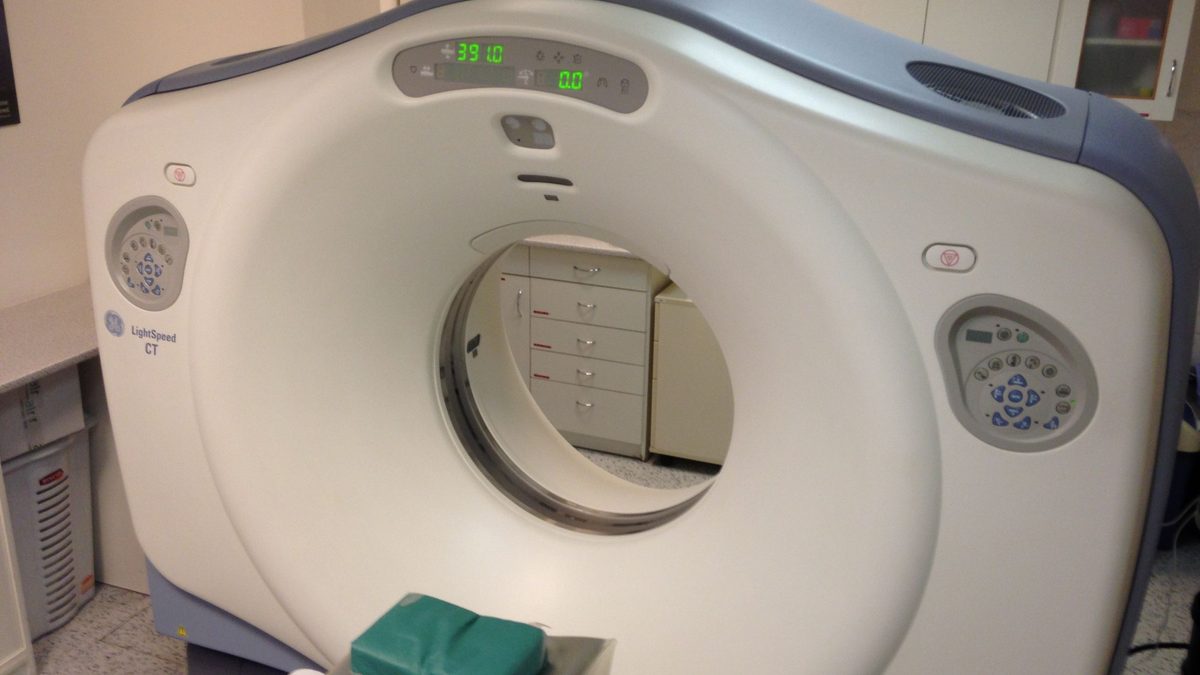
Before your CT, cardiac cath or MRI: iodinated and gadolinium contrast — risks, prevention and the questions kidney patients should ask
Contrast media are one of the commonest sources of avoidable kidney injury for people with CKD. Based on the KDIGO 2012 AKI guideline and the ACR Manual on Contrast Media: iodinated-contrast risk by eGFR, the three pillars of prevention (hydration, dose, no NSAIDs), whether to stop metformin, group I vs group II gadolinium agents and nephrogenic systemic fibrosis, plus the newer evidence that risk was overestimated — and its limits.
Two kinds of contrast, two different risks
| Contrast | Used for | Kidney-related risk |
|---|---|---|
| Iodinated contrast | CT, cardiac catheterisation, angiography, IV urography | Contrast-associated acute kidney injury (CA-AKI) |
| Gadolinium-based contrast (GBCA) | MRI | Nephrogenic systemic fibrosis (NSF) — rare but serious |
The mechanisms and precautions are entirely different, so they are covered separately.
Part 1: Iodinated contrast
How big is the risk?
- Iodinated contrast is directly toxic to tubular cells and causes medullary vasoconstriction and hypoxia.
- eGFR is the main risk factor. The ACR 2024 manual regards eGFR <30 mL/min/1.73 m² as clearly high risk; eGFR 30–44 as mildly increased; and risk from intravenous contrast in stable CKD with eGFR ≥45 as very low.
- Other risk factors: ongoing AKI, dehydration, diabetes with CKD, heart failure, concurrent nephrotoxins such as NSAIDs, repeated doses within a short interval, and intra-arterial injection (e.g. cardiac catheterisation), which carries higher risk than intravenous.
Newer evidence: the risk was overestimated
Since the 2010s, several large propensity-matched studies (e.g. McDonald et al., Radiology 2014; Hinson et al., Ann Emerg Med 2017) found no significant difference in AKI rates between patients with eGFR ≥30 who received IV contrast CT and those who did not — much of what used to be called "contrast nephropathy" was fluctuation driven by the patient's underlying illness.
Hence the 2020 ACR–National Kidney Foundation consensus: a genuinely needed contrast study should not be withheld out of concern for the kidneys; the right approach is to identify high-risk patients and apply prevention.
That does not mean zero risk: at eGFR <30, with intra-arterial injection, dehydration or clinical instability, the risk remains real.
Three pillars of prevention (KDIGO 2012 AKI guideline §4.4)
- Assess necessity and alternatives: can non-contrast CT, ultrasound or MRI (see gadolinium below) answer the clinical question?
- Intravenous fluids: for high-risk patients, KDIGO suggests isotonic saline (or bicarbonate) before and after the study; oral hydration has weaker evidence but dehydration must be avoided. Volumes need individual adjustment in heart failure and dialysis patients.
- Lowest necessary dose, low- or iso-osmolar agents, and avoid repeat injections within 48–72 hours.
KDIGO does not recommend drugs other than N-acetylcysteine for prevention, and NAC itself has weak evidence (PRESERVE 2018 showed no benefit) — most guidelines no longer recommend it.
Do dialysis patients need an extra session to "wash out" contrast?
KDIGO and ACR: no — extra dialysis solely to remove contrast is not needed; keep the usual schedule. Peritoneal dialysis or new dialysis patients with substantial residual function should discuss with their nephrologist.
What about metformin?
Metformin does not harm the kidney, but if contrast causes AKI, metformin accumulation can trigger lactic acidosis. ACR 2024 advice:
- eGFR ≥30, no AKI, intravenous contrast: no need to stop.
- eGFR <30, or AKI, or intra-arterial contrast (cardiac cath etc.): hold at the time of the study and restart after 48 hours once kidney function is confirmed stable.
Tell the radiology department and the ordering doctor about your metformin before the study and let them decide.
What to say beforehand and watch for afterwards
Before: "I have chronic kidney disease, my eGFR is ___; I take metformin / an ACE inhibitor / a diuretic / NSAIDs." Bring blood results from the last 3 months.
Within 48–72 hours after: if you notice a clear drop in urine output, leg swelling, breathlessness or nausea, return for a blood test.
Part 2: Gadolinium contrast for MRI
What is nephrogenic systemic fibrosis (NSF)?
A rare disease recognised in 2006: fibrosis of skin and internal organs with joint contractures, potentially disabling or fatal, occurring almost exclusively in patients with severe kidney impairment (eGFR <30, especially on dialysis) after certain gadolinium agents.
Group I vs group II gadolinium agents (ACR classification)
| Group | Examples | NSF risk |
|---|---|---|
| Group I (linear, less stable) | gadodiamide, gadopentetate, gadoversetamide | The vast majority of NSF cases; contraindicated at eGFR <30; withdrawn in most countries |
| Group II (macrocyclic, stable) | gadobutrol, gadoterate, gadoteridol, gadobenate | Extremely low risk: large reviews in eGFR <30 and dialysis patients found essentially no new cases |
| Group III | gadoxetate (liver-specific) | Insufficient data |
ACR 2024 position: with a group II agent, no kidney-function screening or delay is required for NSF purposes; dialysis patients may receive it (routine dialysis soon after is reasonable but an extra session is not necessary).
A separate issue — gadolinium deposition in brain and bone — has no proven clinical harm to date, but the FDA requires labelling; avoiding unnecessary repeat injections is sensible.
So is MRI safer for kidney patients?
For people with reduced kidney function, MRI with a group II gadolinium agent is usually safer than iodinated-contrast CT, provided the study actually answers the clinical question — and make sure the facility uses a group II agent.
Four questions to ask
- Does this study really need contrast? Is there an alternative?
- Given my eGFR, do I need IV fluids beforehand?
- Should I hold my metformin / diuretic / ACE inhibitor, and when do I restart?
- If it is an MRI, is a group II (macrocyclic) gadolinium agent being used?
References
- KDIGO Clinical Practice Guideline for Acute Kidney Injury (Section 4.4). Kidney Int Suppl 2012;2:1–138. https://doi.org/10.1038/kisup.2012.1
- American College of Radiology Committee on Drugs and Contrast Media. ACR Manual on Contrast Media, 2024. https://www.acr.org/Clinical-Resources/Clinical-Tools-and-Reference/Contrast-Manual
- Davenport MS, et al. Use of Intravenous Iodinated Contrast Media in Patients with Kidney Disease: Consensus Statements from the ACR and the National Kidney Foundation. Radiology 2020;294:660–668. https://doi.org/10.1148/radiol.2019192094
- McDonald JS, et al. Intravenous Contrast Material–induced Nephropathy: Causal or Coincident Phenomenon? Radiology 2013;267:106–118. https://doi.org/10.1148/radiol.12121823
- Weisbord SD, et al. Outcomes after Angiography with Sodium Bicarbonate and Acetylcysteine (PRESERVE). N Engl J Med 2018;378:603–614. https://doi.org/10.1056/NEJMoa1710933
- Woolen SA, et al. Risk of NSF in Patients With Stage 4 or 5 CKD Receiving a Group II Gadolinium-Based Contrast Agent: Systematic Review and Meta-analysis. JAMA Intern Med 2020;180:223–230. https://doi.org/10.1001/jamainternmed.2019.5284
This article compiles publicly available medical information for educational purposes only and is not medical advice. For any health or medication question, please consult a qualified healthcare professional.
Related Reading

Blood pressure in CKD: why the target is "<120", how to measure at home so it counts, and why one normal reading is no reason to stop your ACEi/ARB
Hypertension is both a cause and a consequence of kidney disease. The KDIGO 2021 blood-pressure guideline suggests a standardized systolic BP below 120 mmHg — but that target only applies to a correctly taken reading. This article covers the SPRINT evidence, a seven-step measurement technique, how to bring a home log to your visit, what to do when creatinine or potassium rise on an ACEi/ARB, and sodium targets.
Pain relief with kidney disease: why NSAIDs are risky, is acetaminophen safe, do patches count, and the "triple whammy"
Headache, joint pain, a cold — one casual painkiller can be the start of acute kidney injury for a kidney patient. Based on KDIGO, FDA labels and the BMJ: which drugs are NSAIDs (including many cold remedies), at what eGFR guidelines say "avoid", the ACEi/ARB + diuretic + NSAID triple whammy, the safety limits of acetaminophen and topical agents, and sick-day rules.
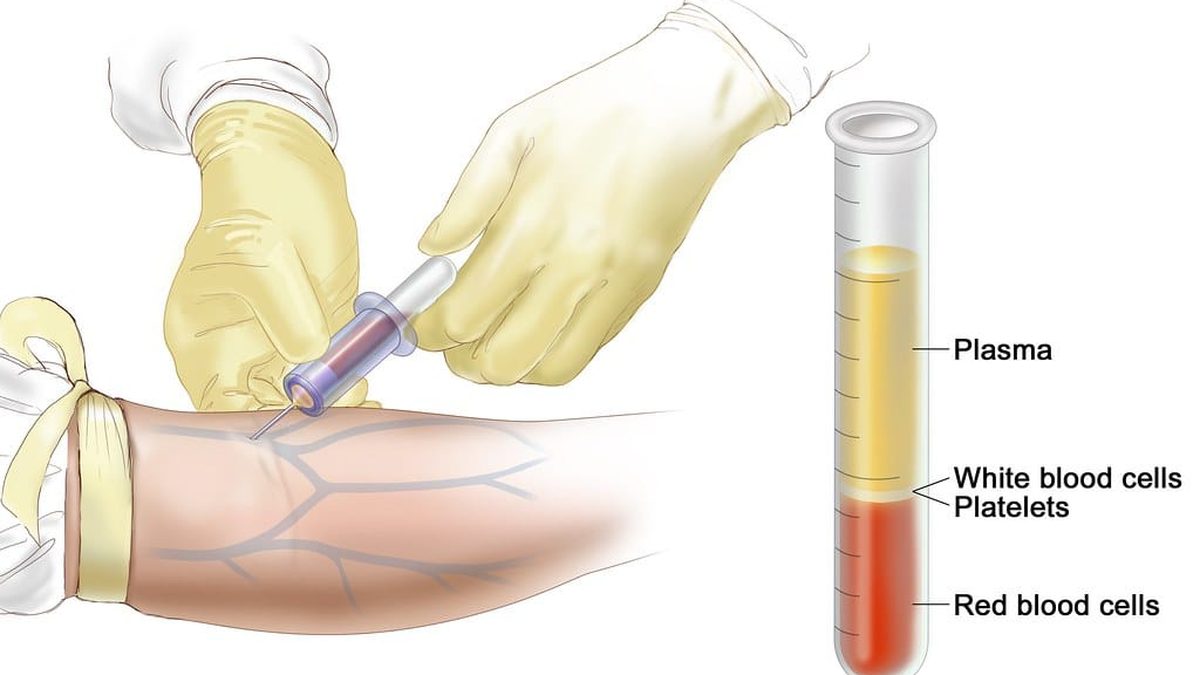
Anemia in CKD: why kidney patients become anemic, iron first or injections, and what the new oral HIF drugs are
Constant fatigue and breathlessness on the stairs may be renal anemia, not "just age". Based on the KDIGO anemia guideline: definition and symptoms, why iron comes first, why the ESA hemoglobin target is not "the higher the better", the evidence and concerns around oral HIF-PH inhibitors, and what to ask at your visit.
