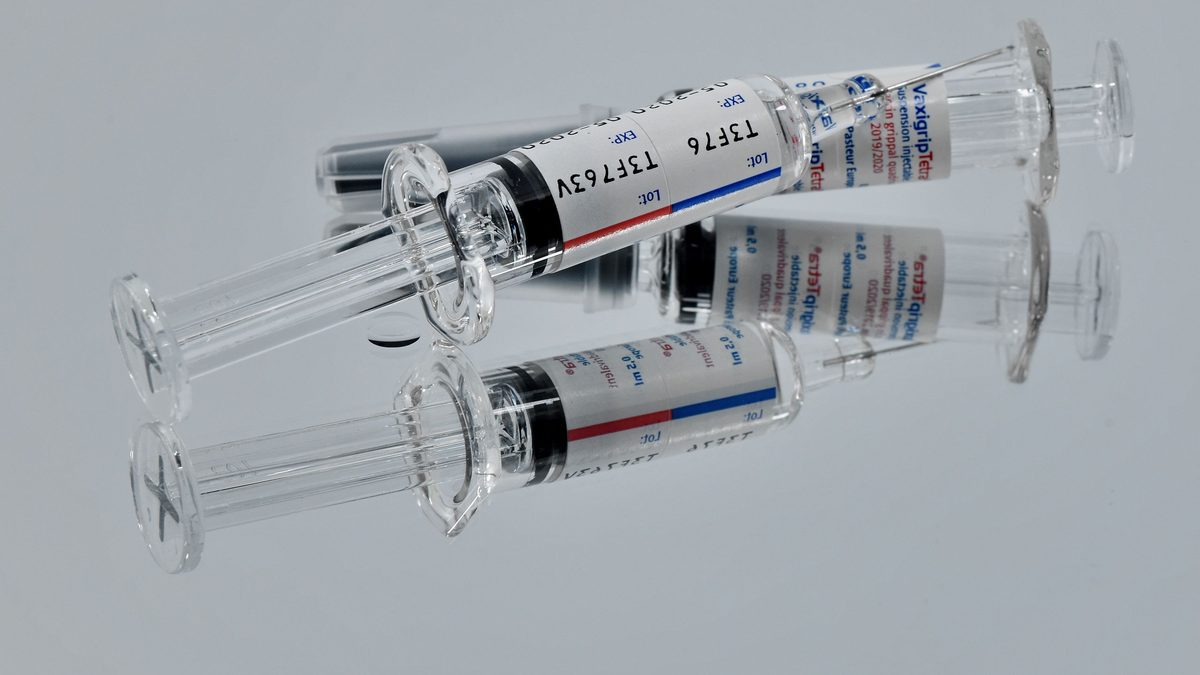
Vaccines for kidney patients and transplant recipients: the full list — what to get, what is absolutely off-limits, and when timing matters most
"No vaccines after transplant" is a common myth. Only live attenuated vaccines are contraindicated; the rest matter even more because immunity is weaker. Based on the American Society of Transplantation 2019 guideline, CDC/ACIP and KDIGO: recommended vaccines across CKD, dialysis and transplant, the live-vaccine list, recombinant zoster vaccine, high-dose hepatitis B strategy, timing, and household vaccination.
Why kidney patients need vaccines more, not less
Immunity is weaker in CKD, on dialysis and after transplant: uremia impairs white-cell function, dialysis access is an entry point for infection, and anti-rejection drugs directly suppress the immune system. As a result:
- Infection is the second leading cause of death in dialysis patients (after cardiovascular disease) and a major cause of hospitalisation.
- Influenza, pneumococcal pneumonia and shingles are more common and more severe.
- Vaccine responses weaken as kidney function declines, so the earlier you vaccinate, the better it works.
The key distinction: live vs inactivated
| Type | How it works | After transplant / on strong immunosuppression |
|---|---|---|
| Live attenuated | Weakened live virus/bacteria | Contraindicated (may replicate and cause disease in immunocompromised people) |
| Inactivated / subunit / recombinant / mRNA | Killed pathogen or fragments; cannot replicate | Allowed — and recommended |
Live vaccines not to be given after transplant (AST 2019)
- MMR (measles/mumps/rubella)
- Varicella (chickenpox)
- The older live zoster vaccine (Zostavax) — withdrawn in many countries
- Yellow fever
- Live attenuated nasal-spray influenza (LAIV)
- Oral live typhoid, BCG, oral polio (OPV), smallpox/mpox ACAM2000
Dialysis and general CKD patients are not contraindicated for live vaccines (unless also on potent immunosuppressants); decide with your doctor.
Recommended vaccines by stage
All CKD / dialysis / transplant patients
| Vaccine | Recommendation | Notes |
|---|---|---|
| Influenza (inactivated injection) | 1 dose every year | High-dose or adjuvanted formulations may be considered for ≥65 or immunocompromised |
| Pneumococcal | By age and national schedule (e.g. single PCV20, or PCV15 followed by PPSV23) | CKD, dialysis and transplant are all high-risk — no need to wait until 65 |
| COVID-19 | Per current season's advice | Additional doses usually recommended for the immunocompromised |
| Hepatitis B | Check antibody; complete series if negative | Dialysis patients use high-dose (40 µg) or 4-dose schedules; check anti-HBs after the series (≥10 mIU/mL); boost if below |
| Tetanus/diphtheria/pertussis (Tdap) | Booster every 10 years | At least one adult dose containing pertussis |
| Recombinant zoster vaccine (Shingrix, non-live) | 2 doses 2–6 months apart | CDC/ACIP 2022: immunocompromised adults ≥19 are eligible, no need to wait until 50; ideally before transplant, after transplant ask your team about timing |
| HPV | By age (usually ≤26, some to 45) | HPV-related cancer risk is increased after transplant |
| RSV | Per national advice for high-risk adults | Recently approved; dialysis/transplant populations count as high-risk |
Before transplant (on the waiting list)
AST strongly advises completing all vaccines before transplant, for two reasons:
- Immune responses are much better before transplant than after.
- Live vaccines (MMR, varicella, and historically zoster) cannot be given after transplant — the waiting period is the last chance; live vaccines should be completed at least 4 weeks before transplant.
After transplant
- Inactivated vaccines usually resume 3–6 months post-transplant, once immunosuppression is at maintenance levels (AST; influenza may be given from 1 month during the season).
- After rejection treatment (high-dose steroids, ATG, rituximab) responses are poorer; vaccination is usually delayed several months — discuss with your team.
- Vaccination does not cause rejection — this is well studied; do not skip vaccines out of fear of rejection.
Common questions
Q: Will vaccines change my anti-rejection drug levels? No. Vaccines do not affect tacrolimus or cyclosporine metabolism.
Q: Should my family be vaccinated? Yes. Household members (especially children) fully vaccinated against influenza, COVID-19 and pertussis greatly reduce the chance of bringing infection home ("cocooning"). Live vaccines in household members (MMR, varicella) are generally safe for the recipient; if a family member develops a rash after varicella vaccine, avoid contact until it crusts over.
Q: If vaccine responses are weaker, is it still worth it? Yes. Even with lower antibody levels, studies consistently show lower rates of severe disease and hospitalisation in vaccinated patients. Some vaccines (hepatitis B, COVID-19) can be reinforced with boosters or higher doses.
Q: I need yellow fever vaccine for travel — what now? Yellow fever is a live vaccine and contraindicated after transplant. A travel-medicine clinic can issue a medical waiver letter; avoid high-risk destinations.
Three questions to ask with your vaccination record in hand
- Is my hepatitis B antibody (anti-HBs) protective?
- Have I had pneumococcal and recombinant zoster vaccines?
- Which vaccines must I not have at my current stage?
References
- Danziger-Isakov L, Kumar D; AST Infectious Diseases Community of Practice. Vaccination of solid organ transplant candidates and recipients. Clin Transplant 2019;33:e13563. https://doi.org/10.1111/ctr.13563
- Anderson TC, et al. Use of Recombinant Zoster Vaccine in Immunocompromised Adults Aged ≥19 Years: ACIP Recommendations — United States, 2022. MMWR 2022;71:80–84. https://www.cdc.gov/mmwr/volumes/71/wr/mm7103a2.htm
- KDIGO 2024 Clinical Practice Guideline for the Evaluation and Management of CKD (Chapter 4). Kidney Int 2024;105(4S):S117–S314. https://doi.org/10.1016/j.kint.2023.10.018
- CDC. Dialysis Safety — Vaccination recommendations for dialysis patients. https://www.cdc.gov/dialysis-safety/
- Rubin LG, et al. 2013 IDSA Clinical Practice Guideline for Vaccination of the Immunocompromised Host. Clin Infect Dis 2014;58:e44–e100. https://doi.org/10.1093/cid/cit684
- USRDS Annual Data Report — ESRD: Mortality. https://usrds-adr.niddk.nih.gov/
This article compiles publicly available medical information for educational purposes only and is not medical advice. For any health or medication question, please consult a qualified healthcare professional.
Related Reading

The most common cancer after kidney transplant is skin cancer: how high the risk is, daily sun protection, and which spots need a doctor now
Anti-rejection drugs sharply raise skin-cancer risk in transplant recipients — squamous cell carcinoma can be 65–250 times more common than in the general population. Yet it is also the most preventable and most detectable cancer. Based on the KDIGO 2009 transplant guideline and the NEJM review: risk factors, concrete sun-protection steps, monthly self-checks (ABCDE and the "non-healing" rule), annual dermatology exams, and which immunosuppression adjustments have evidence.

Anti-Rejection Drug Interactions: The Complete List of Foods, Medicines and Supplements to Watch — Grapefruit, Pomelo, Paxlovid, NSAIDs, Herbs and Vaccines (v1.1, updated 2026-10-13)
What "fights" with tacrolimus, cyclosporine, sirolimus, mycophenolate and azathioprine after a kidney transplant? A red/amber/orange-graded list of 60+ foods, herbs, supplements, prescription drugs and vaccines, with practical habits, a version history and 21 references.

What Is a Kidney Transplant? From Evaluation and Waiting to Surgery and Lifelong Care
Kidney transplantation offers the best survival and quality of life for kidney failure, but it is not a cure — it exchanges one chronic condition for another that needs lifelong management. This article covers donor sources, matching, surgery, rejection, medications and long-term care.
