Atrial Fibrillation: Why It Raises Stroke Risk Fivefold, How to Score CHA₂DS₂-VA, and Choosing Anticoagulants When Kidneys Are Weak
Atrial fibrillation is the most common sustained arrhythmia; it raises stroke risk about fivefold and AF strokes tend to be more severe. Based on the 2024 ESC and 2023 ACC/AHA guidelines: symptoms and self-detection, stroke-risk scoring, DOACs vs warfarin, and the special considerations for CKD and dialysis.
목차
What atrial fibrillation is
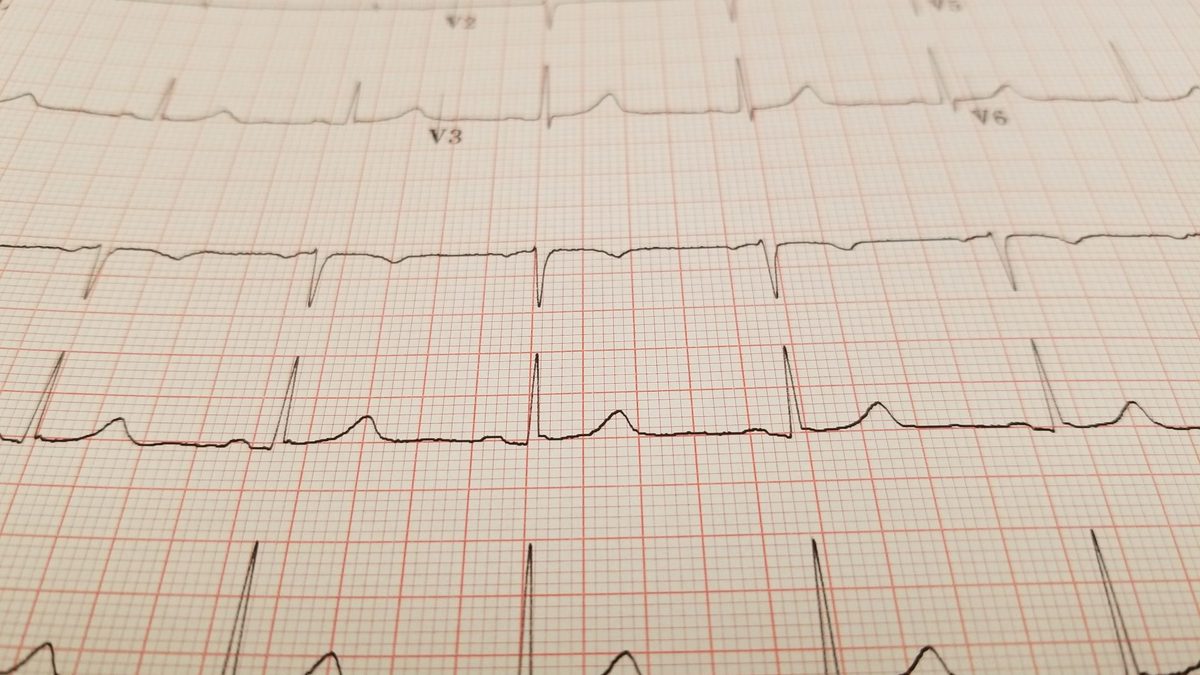
In atrial fibrillation (AF) the atria lose organised contraction and "quiver" at 300–600 times a minute while the ventricles beat irregularly. About 59 million people have AF worldwide, and prevalence rises steeply with age — roughly 1 in 10 over 80 [1][2].
AF itself is rarely fatal; the danger is blood pooling in the atrium and clotting. A clot travelling to the brain causes an ischaemic stroke. AF raises stroke risk about fivefold, and AF-related strokes are typically larger, more disabling and more often fatal [1][2].
Symptoms: some people feel nothing
- Palpitations (fast, irregular, "skipped" beats)
- Breathlessness, fatigue, reduced exercise capacity
- Dizziness, chest discomfort
- Around one third have no symptoms; the first sign may be a stroke [1]
Self-detection
- Pulse check: radial pulse at the wrist for 30 seconds; a completely irregular rhythm warrants an ECG.
- Smartwatches/bands: AF detection on Apple Watch, Fitbit and others is reasonably accurate, but a positive result must be confirmed by ECG and a negative does not rule AF out [1][2].
- Opportunistic screening (pulse or single-lead ECG) is recommended from age 65 [1].
Stroke risk: CHA₂DS₂-VA
The 2024 ESC guideline simplified CHA₂DS₂-VASc to CHA₂DS₂-VA, dropping the sex point [1]:
| Item | Points |
|---|---|
| C Heart failure | 1 |
| H Hypertension | 1 |
| A₂ Age ≥75 | 2 |
| D Diabetes | 1 |
| S₂ Prior stroke/TIA/thromboembolism | 2 |
| V Vascular disease (MI, peripheral artery disease, aortic plaque) | 1 |
| A Age 65–74 | 1 |
- ≥2: anticoagulation recommended.
- 1: anticoagulation should be considered.
- 0: not recommended (risk lower than bleeding risk).
The 2023 US guideline still uses CHA₂DS₂-VASc (with 1 point for female sex) and thresholds of ≥2 men / ≥3 women [2].
Note: CKD is not in the score, yet CKD raises both stroke and bleeding risk [2][5].
Anticoagulants: DOACs before warfarin
Antiplatelets (aspirin) do not prevent AF stroke; guidelines explicitly advise against aspirin alone [1][2].
| Drug | Notes |
|---|---|
| DOACs: apixaban, rivaroxaban, edoxaban, dabigatran | Preferred. In large trials non-inferior or superior to warfarin, with about half the intracranial bleeding, and no routine blood monitoring [1][2][3] |
| Warfarin | For mechanical valves, moderate–severe mitral stenosis, or when DOACs are unsuitable (e.g. dialysis — see below). Needs INR 2.0–3.0 with time in range >70% [1][2] |
Key DOAC points [3]:
- Doses depend on age, weight and kidney function; never under-dose "to be safe" — it increases stroke without reducing major bleeding.
- Interactions with rifampicin, some anti-epileptics and strong CYP3A4/P-gp inhibitors; transplant recipients on tacrolimus/ciclosporin need particular care — use this site's interaction lookup and ask your pharmacist.
- Missed dose? Once-daily drugs can be taken within 12 hours; twice-daily within 6 hours; otherwise skip — never double [3].
Bleeding risk
A HAS-BLED score ≥3 flags high bleeding risk but is not a reason to withhold anticoagulation; it prompts fixing modifiable factors: BP control, stopping unnecessary NSAIDs/aspirin, limiting alcohol, fall prevention [1][2].
Choosing when kidney function is reduced
The commonest question from kidney patients, and the area with the least evidence [2][3][5]:
| eGFR | Guidance |
|---|---|
| ≥50 | Standard DOAC dose |
| 30–49 | DOACs usable with label-based reduction (e.g. rivaroxaban 15 mg, edoxaban 30 mg; apixaban drops to 2.5 mg bid only if 2 of 3: age ≥80, weight ≤60 kg, creatinine ≥1.5 mg/dL) |
| 15–29 | Weak evidence; reduced-dose apixaban or rivaroxaban may be considered (US labels allow; dabigatran contraindicated in Europe) |
| <15 or dialysis | Very few randomised trials. US label permits apixaban (observational data plus small RENAL-AF and AXADIA trials); most DOACs are not approved in Europe. Warfarin's benefit in dialysis is uncertain and it may accelerate vascular calcification. Decisions must be individualised jointly by cardiology and nephrology; left-atrial-appendage occlusion is an alternative [2][4][5] |
Also note that DOAC labels use Cockcroft-Gault creatinine clearance (CrCl), which can differ from CKD-EPI eGFR, especially at extremes of body weight [3].
Controlling the heartbeat: rhythm vs rate
- Rate control (beta-blockers, diltiazem/verapamil, digoxin): keep the resting rate <110 bpm, usually sufficient.
- Rhythm control (antiarrhythmics, cardioversion, catheter ablation): EAST-AFNET 4 showed that early rhythm control within a year of diagnosis reduces cardiovascular events [6]; ablation beats drugs for symptomatic paroxysmal AF.
- Whatever the strategy, anticoagulation continues according to the score, regardless of whether sinus rhythm returns [1][2].
Drug cautions for kidney patients
- Diltiazem/verapamil interact seriously with tacrolimus/ciclosporin (transplant).
- Digoxin is renally cleared: reduce the dose and monitor levels in CKD; low potassium increases toxicity.
- Sotalol and dofetilide are renally cleared; contraindicated or dose-adjusted at low eGFR [2].
Risk factors you can change
The 2024 ESC guideline makes risk-factor management the foundation of care (the "C" of AF-CARE) [1]: BP control, weight loss (10% loss in BMI ≥27 markedly reduces recurrence), limiting alcohol (>3 drinks/week increases AF), treating sleep apnoea, controlling diabetes, regular exercise.
When to seek care immediately
Call emergency services (stroke warning FAST):
- Face drooping, Arm weakness on one side, Speech slurred, Time to call — even if symptoms resolve in minutes (TIA).
- Heart rate >150 with chest pain, fainting or breathlessness.
- On anticoagulants: black stools, vomiting blood, persistent blood in urine, severe headache after a head knock.
Same day: new persistent palpitations or a completely irregular pulse; several missed anticoagulant doses.
Questions to ask your doctor
- What is my CHA₂DS₂-VA score?
- For my kidney function (eGFR/CrCl), which anticoagulant and dose fit best?
- Do my other medicines (especially anti-rejection drugs and painkillers) interact with it?
- Am I a candidate for catheter ablation?
- If I need surgery or a dental extraction, how do I pause and restart the anticoagulant?
References
- Van Gelder IC, et al. 2024 ESC Guidelines for the management of atrial fibrillation. Eur Heart J. 2024;45(36):3314–3414. https://doi.org/10.1093/eurheartj/ehae176
- Joglar JA, et al. 2023 ACC/AHA/ACCP/HRS Guideline for Atrial Fibrillation. Circulation. 2024;149(1):e1–e156. https://doi.org/10.1161/CIR.0000000000001193
- Steffel J, et al. 2021 EHRA Practical Guide on NOACs in atrial fibrillation. Europace. 2021;23(10):1612–1676. https://doi.org/10.1093/europace/euab065
- Pokorney SD, et al. RENAL-AF. Circulation. 2022;146(23):1735–1745. https://doi.org/10.1161/CIRCULATIONAHA.121.054990
- KDIGO 2024 Clinical Practice Guideline for CKD. Kidney Int. 2024;105(4S):S117–S314. https://doi.org/10.1016/j.kint.2023.10.018
- Kirchhof P, et al. EAST-AFNET 4. N Engl J Med. 2020;383(14):1305–1316. https://doi.org/10.1056/NEJMoa2019422
This article compiles publicly available medical information for educational purposes only. It is not medical advice and has not been reviewed by a practising physician. For any health or medication question, consult a qualified professional. For chest pain, sudden breathlessness, one-sided weakness or slurred speech, call your local emergency number or go to the emergency department immediately.
변경 기록
- 初版:依 2024 ESC 心房顫動指引、2023 ACC/AHA/ACCP/HRS 指引、KDIGO 2024 CKD 指引整理;抗凝血劑劑量依各藥仿單。
Where to go next
Related knowledge
Metabolic Dysfunction-Associated Steatotic Liver Disease (MASLD) and Risk of Atrial Fibrillation Recurrence After Catheter Ablation: Systematic Review and Met
A systematic review and random-effects meta-analysis showed MASLD and higher liver fibrosi…
Stroke: Why Every Minute Counts, the FAST Test, the 10 Risk Factors Behind 90% of Strokes, and Why Kidney Patients Face 2–3 Times the Risk
One in four adults over 25 will have a stroke in their lifetime, and 1.9 million brain cel…
查核:「中風了也沒藥醫,先在家觀察一晚、明天再看醫生」是真的嗎?
完全錯誤。缺血性中風有兩種時間窗口內有效的治療:靜脈血栓溶解(4.5 小時內)與動脈取栓(大血管阻塞可至 24 小時)。
Understand the related tests
Related global data
심장과 혈관 · 세계 질병 인구 통계Global burden and trends for this topic (with sources and years)Lived experience

After Rebirth: From Dialysis Patient to Health Educator — Choosing to Return to the Ward
Shock at birth led to chronic glomerulonephritis; dialysis began at 26; a kidney transplan…

Why Did I End Up on Dialysis?
A difficult birth, shock and oxygen deprivation damaged both my kidneys. As a teenager I s…
