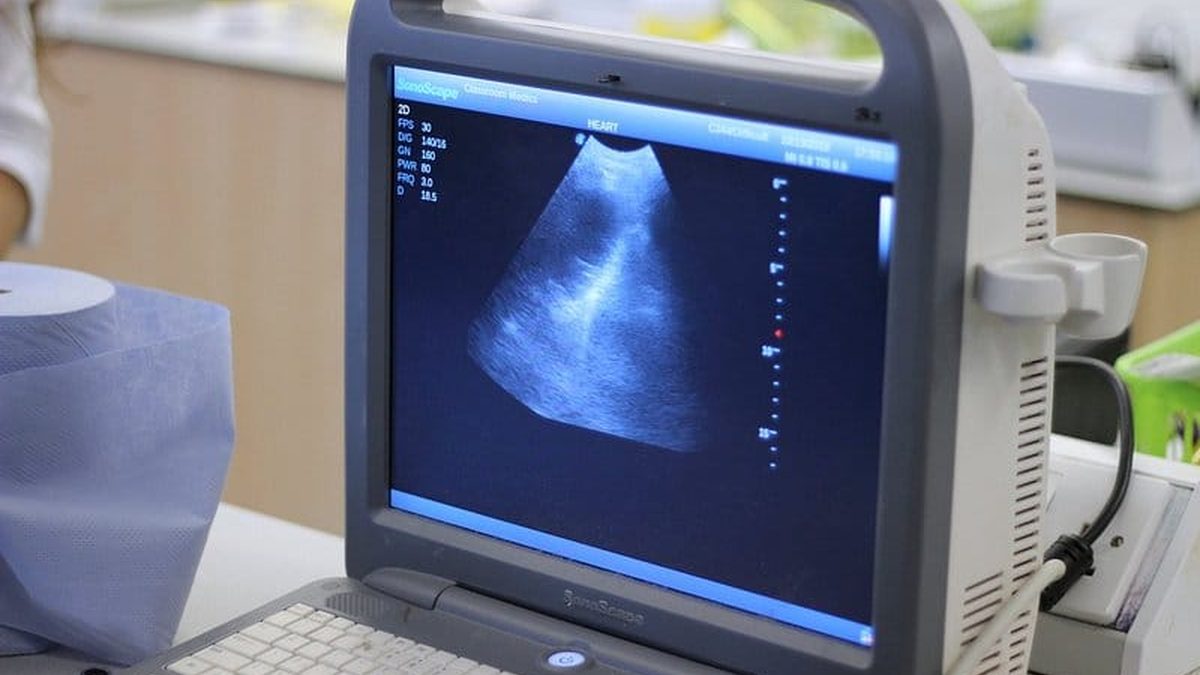
Fatty Liver Is More Than "Fat in the Liver": The MASLD Rename, How to Calculate FIB-4, Who Needs Fibrosis Testing, and How Much Weight Loss Works
About 1 in 3 adults worldwide has fatty liver; in Taiwan and Japan prevalence is around 30%. Since 2023 it is called MASLD. Based on the 2023 AASLD and 2024 EASL guidelines: why the name changed, who should be screened for fibrosis, the three FIB-4 cut-offs, and the evidence for weight loss and drugs including resmetirom.
Inhalt
Why the name changed: from NAFLD to MASLD
In 2023 the American, European and Latin American liver societies renamed "non-alcoholic fatty liver disease (NAFLD)" to MASLD — metabolic dysfunction-associated steatotic liver disease [1]. Two reasons: the old name defined a disease by what it is not, and "fatty" was felt to be stigmatising.
The new definition: hepatic steatosis (≥5% of hepatocytes) plus at least one cardiometabolic risk factor:
- BMI ≥25 (≥23 in Asians) or increased waist circumference
- Fasting glucose ≥100 mg/dL, HbA1c ≥5.7%, or type 2 diabetes
- BP ≥130/85 or on antihypertensives
- Triglycerides ≥150 mg/dL
- HDL <40 mg/dL men, <50 women
"NASH" became MASH; those who also drink moderately are classified as MetALD [1].
How common, and why it matters
Global adult prevalence is about 30% and rising; Asia is around 30%, with Taiwanese and Japanese studies reporting 25–35% [2][3]. Most people never progress, but 20–30% develop MASH (inflammation and hepatocyte injury), and a proportion progress to fibrosis → cirrhosis → liver cancer [2][3].
Crucially, the leading cause of death in MASLD is cardiovascular disease, with liver disease second [2][3]. MASLD co-exists strongly with type 2 diabetes and CKD — MASLD roughly raises CKD risk 1.5-fold [4].
What predicts outcome? Fibrosis stage, not fat
Studies consistently show that fibrosis stage (F0–F4), not the amount of fat or the ALT level, is the strongest predictor of liver-related death [2][3]. A normal ALT does not exclude fibrosis.
Step 1: FIB-4 (a blood test you already have)
Both AASLD and EASL recommend FIB-4 as the first-line test [2][3]:
FIB-4 = (age × AST) ÷ (platelets × √ALT)
| FIB-4 | Interpretation | Next step |
|---|---|---|
| <1.3 | Low risk of advanced fibrosis | Recalculate every 1–3 years; manage metabolic risk |
| 1.3–2.67 | Indeterminate | Second-line test: liver stiffness (FibroScan/VCTE) or ELF blood test |
| >2.67 | High risk | Refer to hepatology |
FIB-4 may under-estimate in people <35** and over-estimate **>65 (EASL suggests a lower cut-off of 2.0 above 65) [3]. This site has a FIB-4 calculator.
Step 2: liver stiffness (VCTE)
FibroScan measures stiffness in kPa: <8 kPa makes advanced fibrosis unlikely; ≥12 kPa likely; in between needs further work-up [2][3]. Biopsy remains the gold standard but is rarely needed.
Who should be screened?
AASLD 2023 recommends proactively calculating FIB-4 in [2]:
- Type 2 diabetes
- Obesity with ≥1 metabolic risk factor
- Incidental steatosis on imaging or persistently raised ALT
- First-degree relative with cirrhosis
Treatment: weight loss remains the cornerstone — with clear numbers
| Weight loss | Effect [2][3] |
|---|---|
| ≥3–5% | Reduces liver fat |
| ≥7–10% | Improves MASH inflammation; some fibrosis improvement |
| ≥10% | Marked fibrosis improvement (≈45% of patients) |
How:
- Diet: the Mediterranean pattern has the strongest evidence (reduces liver fat even without weight change); cut fructose (sugary drinks) and ultra-processed food; coffee (≥3 cups/day, unsweetened) is associated with less fibrosis [2][3].
- Exercise: 150–300 min/week moderate aerobic plus resistance training; reduces liver fat even without weight loss [3].
- Alcohol: minimise; abstain completely with advanced fibrosis [2][3].
Medications
- Resmetirom (thyroid hormone receptor-β agonist): FDA-approved in 2024 for MASH with F2–F3 fibrosis; in MAESTRO-NASH, MASH resolution at one year was 26–30% vs 10% placebo and fibrosis improvement 24–26% vs 14% [5]. Not yet available in Taiwan or Japan (mid-2026).
- GLP-1 receptor agonists (semaglutide, tirzepatide): act largely through weight loss; the phase 3 ESSENCE trial showed MASH resolution and fibrosis improvement with semaglutide; appropriate with coexisting diabetes or obesity [3][6].
- SGLT2 inhibitors, pioglitazone: consider in type 2 diabetes; evidence for reduced liver fat and histological improvement [2][3].
- Vitamin E (800 IU/day): may be considered in non-diabetic MASH, with long-term safety concerns [2].
- No good evidence: "liver-protective" supplements and milk thistle (silymarin) lack high-quality data and must not replace weight loss [2].
Notes for kidney patients and transplant recipients
- MASLD and CKD share metabolic causes; a single FIB-4 is reasonable in CKD, but CKD may lower platelets and inflate FIB-4 — interpret with hepatology.
- After transplant, steroids, tacrolimus and weight gain promote steatosis; post-transplant diabetes raises risk further.
- Pioglitazone causes fluid retention — caution in CKD and heart failure.
- Check weight-loss drugs against anti-rejection medication with your transplant team.
When to seek care
Urgently: yellow skin or eyes, vomiting blood or black stools, rapid abdominal swelling, confusion or drowsiness (complications of cirrhosis).
Routine appointment: FIB-4 >1.3, ALT persistently above the upper limit, diabetes with no liver assessment ever, or a first-degree relative with cirrhosis or liver cancer.
Questions to ask your doctor
- What is my FIB-4? Do I need a FibroScan?
- Do I have advanced fibrosis? How often should I be followed, and should I be screened for liver cancer?
- What does 7–10% weight loss mean in kilograms for me? Can a dietitian help?
- Could my diabetes medication be switched to one that also helps the liver (SGLT2i, GLP-1 RA)?
- Should I stop any of my supplements?
References
- Rinella ME, et al. A multisociety Delphi consensus statement on new fatty liver disease nomenclature. Hepatology. 2023;78(6):1966–1986. https://doi.org/10.1097/HEP.0000000000000520
- Rinella ME, et al. AASLD Practice Guidance on NAFLD. Hepatology. 2023;77(5):1797–1835. https://doi.org/10.1097/HEP.0000000000000323
- EASL–EASD–EASO Clinical Practice Guidelines on MASLD. J Hepatol. 2024;81(3):492–542. https://doi.org/10.1016/j.jhep.2024.04.031
- Mantovani A, et al. NAFLD and risk of incident CKD: updated meta-analysis. Gut. 2022;71(1):156–162. https://doi.org/10.1136/gutjnl-2020-323082
- Harrison SA, et al. MAESTRO-NASH. N Engl J Med. 2024;390(6):497–509. https://doi.org/10.1056/NEJMoa2309000
- Sanyal AJ, et al. ESSENCE. N Engl J Med. 2025;392(21):2089–2099. https://doi.org/10.1056/NEJMoa2413258
This article compiles publicly available medical information for educational purposes only. It is not medical advice and has not been reviewed by a practising physician. For any health or medication question, consult a qualified professional. For chest pain, sudden breathlessness, one-sided weakness or slurred speech, call your local emergency number or go to the emergency department immediately.
Änderungsprotokoll
- 初版:依 2023 AASLD 實務指引、2024 EASL-EASD-EASO 指引、2023 多學會新命名共識及 resmetirom 第 3 期試驗整理。
Where to go next
Related knowledge
查核:「咖啡傷肝,肝不好的人不能喝咖啡」是真的嗎?
不成立。觀察性研究與綜合回顧多顯示,喝咖啡與較低肝癌及某些肝病相關死亡風險有關,最新脂肪肝指引也提到「可能有益」[1][2][3]。但無法證明因果,也不代表所有個案都適合喝咖啡,仍須與醫療團隊討論。
查核:「脂肪肝沒什麼大不了,反正也沒藥醫」是真的嗎?
兩句都不對。脂肪肝(現稱 MASLD)影響全球約 30% 成人,少數會進展到肝纖維化、肝硬化與肝癌,也是心血管疾病與慢性腎臟病的獨立危險因子;減重 7–10% 可讓多數人的肝脂肪與發炎改善,2024 年美國 FDA 核准了第一個針對 MASH 肝纖維化的藥物 resmetirom。本文整理證據、限制與腎友的關聯。

EASL‑EASD‑EASO Guidance: resmetirom and semaglutide Recommended Use in MASH
This summary compiles the 2026 joint guidance, describing when to consider resmetirom or semaglutide, how to choose between them, and key monitoring points in non-cirrhotic MASH with…
Understand the related tests
Related global data
Leber, Galle & Magen-Darm · Globale KrankheitsstatistikGlobal burden and trends for this topic (with sources and years)Lived experience

After Rebirth: From Dialysis Patient to Health Educator — Choosing to Return to the Ward
Shock at birth led to chronic glomerulonephritis; dialysis began at 26; a kidney transplant came on Christmas Day at 32.

Why Did I End Up on Dialysis?
A difficult birth, shock and oxygen deprivation damaged both my kidneys. As a teenager I skipped my medication. At 26, a single glass of orange juice sent me straight to the emergency room.
