Dental Instrument Guide · 31 instruments · 23 with licensed images · 2026-10-18

Dental Instrument Guide

A tray of shiny instruments is intimidating when you are in the chair. This guide explains, in plain language, what each tool does, what it feels like, and what dialysis and transplant patients should mention first.

Examination & diagnosis (6)

Mouth mirrorImage verified

Mouth mirror

What it is

A small round mirror on a long handle, used to see the backs of teeth, reflect light and hold the cheek or tongue aside.

What it feels like

Used in almost every check-up; you only feel a light touch — it does not hurt.

CC0 · GennadyL · Wikimedia Commons

Dental explorer (probe)Image verified

Dental explorer (probe)

What it is

A thin instrument with a curved, pointed tip used to feel for softened enamel (decay), calculus and gaps at the edge of fillings.

What it feels like

You may feel it "catch"; sensitive teeth can twinge briefly — tell your dentist.

Public domain · Werneuchen · Wikimedia Commons

Periodontal probeImage verified

Periodontal probe

What it is

A blunt-tipped probe marked in millimetres that measures the depth of the "pocket" between gum and tooth at 6 points per tooth. 1–3 mm is broadly healthy, ≥4 mm needs assessment, ≥6 mm is severe.

What it feels like

Inflamed gums feel tender and may bleed slightly — bleeding itself is a sign of inflammation.

CC BY 4.0 · Lisa J. A. Heitz-Mayfield · Wikimedia Commons
Source: WHO Global oral health status report 2022 (severe periodontitis definition)

Cotton pliers (tweezers)Image verified

Cotton pliers (tweezers)

What it is

Angled tweezers for placing cotton rolls, pellets and small items in and out of the mouth.

What it feels like

You will not feel it.

Public domain · Werneuchen · Wikimedia Commons

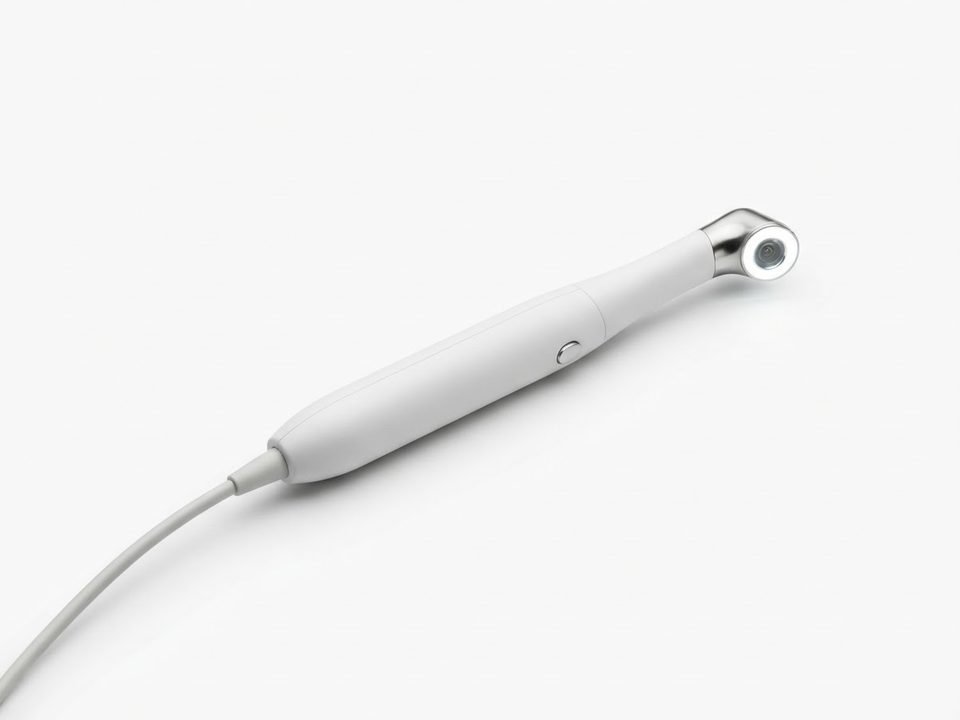
Illustration of an intraoral camera: slim pen-shaped body with angled lens tip and LED ringOriginal illustration

Intraoral camera

What it is

A pen-sized camera that shows magnified live images of your teeth on a screen so you can see what the dentist describes.

What it feels like

Painless; you can ask for the images to be printed or kept in your record.

Original AI-generated educational illustration (not a photograph); shape checked against reference instruments by the site owner · 2026-10-23

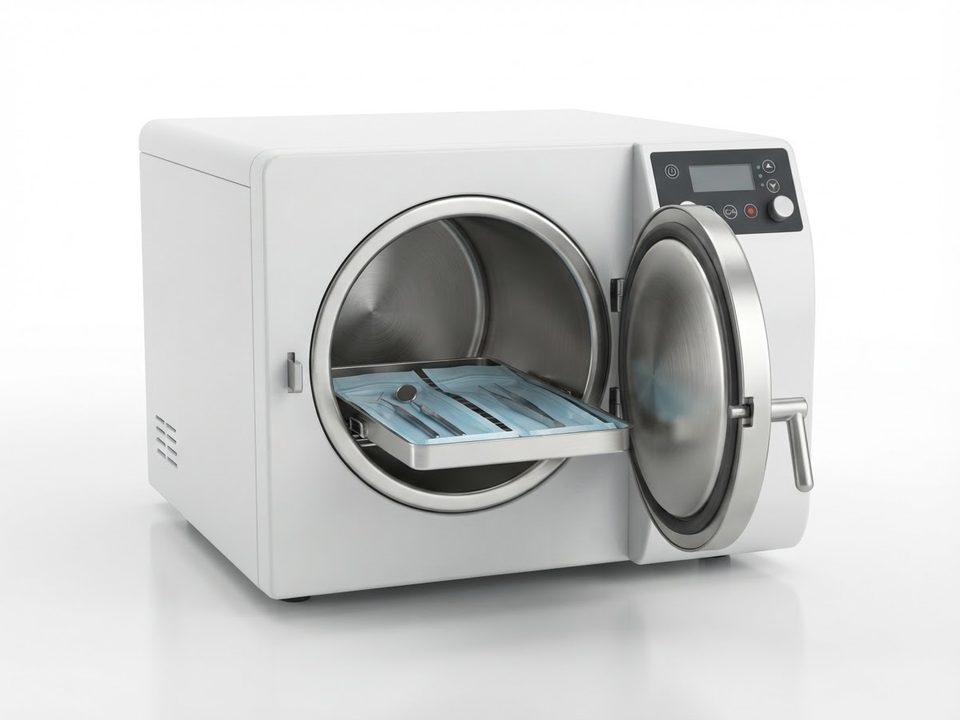
Illustration of a benchtop steam autoclave: round door ajar showing the stainless chamber and pouch trayOriginal illustration

Steam steriliser (autoclave)

What it is

Sterilises handpieces and instruments with saturated steam at 121–134 °C under pressure — the core of dental infection control. Instruments are cleaned, pouched, sterilised and kept sealed until opened in front of you.

What it feels like

You never touch it; what you can notice is whether instruments come out of sealed pouches. Transplant recipients may ask about the clinic’s sterilisation process.

Original AI-generated educational illustration (not a photograph); shape checked against reference instruments by the site owner · 2026-10-23 Source: CDC — Summary of Infection Prevention Practices in Dental Settings (2016)

Imaging (3)

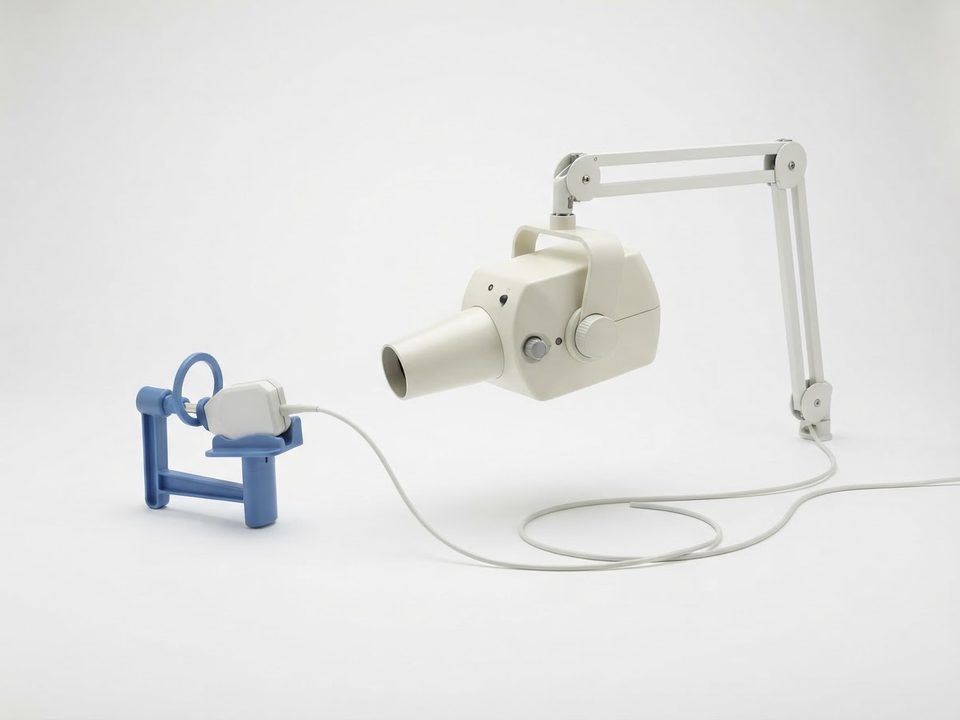
Illustration of intraoral X-ray: digital sensor with bite-block holder and a wall-mounted tube headOriginal illustration

Intraoral X-ray (bitewing / periapical)

What it is

A small sensor or film is placed in the mouth. Bitewings show decay between teeth and bone level; periapicals show the whole tooth and root tip.

What it feels like

A brief foreign-body feeling for a few seconds. The dose is very low (about 0.005 mSv per image — less than a day of natural background radiation); tell staff if you are or may be pregnant.

Original AI-generated educational illustration (not a photograph); shape checked against reference instruments by the site owner · 2026-10-23 Source: ADA/FDA: Dental Radiographic Examinations — Recommendations for Patient Selection and Limiting Radiation Exposure (2012)

Panoramic X-ray (OPG)Image verified

Panoramic X-ray (OPG)

What it is

The machine circles your head once and captures all upper and lower teeth, wisdom teeth, jaws and sinus floors in one image. Common before implants, wisdom-tooth removal and full-mouth assessment.

What it feels like

You stand or sit biting a positioning tab for about 15 seconds without moving; remove glasses, earrings and removable dentures.

CC BY 3.0 · w: Coronation Dental Specialty Group · Wikimedia Commons

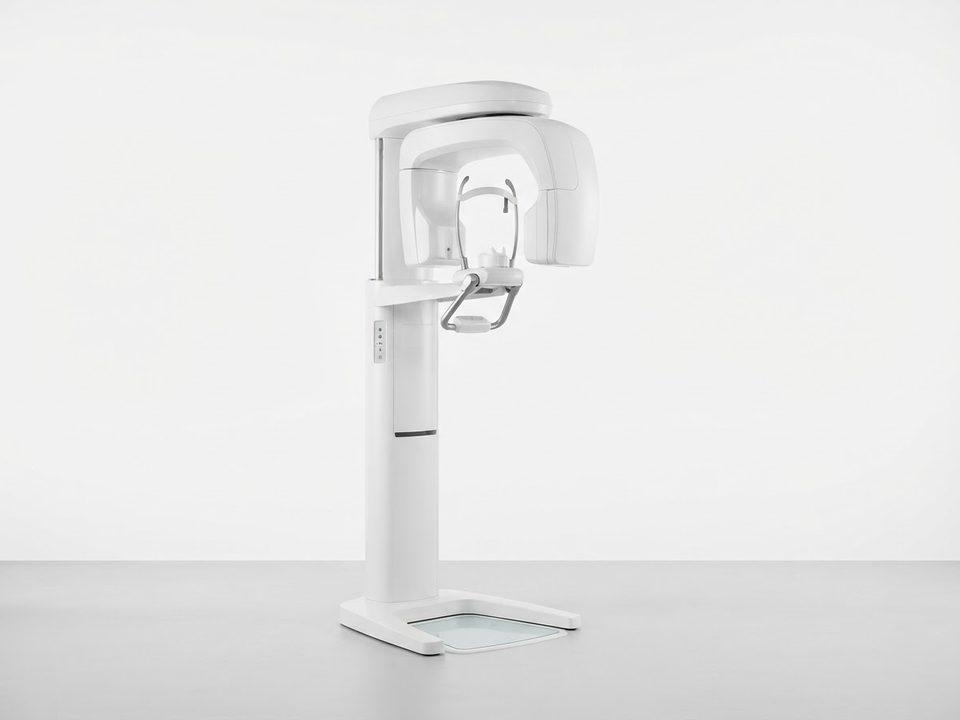
Illustration of a dental CBCT scanner: standing unit with C-shaped gantry at head height and chin restOriginal illustration

Cone-beam CT (CBCT)

What it is

A dental 3D X-ray: you stand or sit while the unit rotates around your head, producing volumetric images of the jaws, roots, nerve canals and sinuses. Used for implant planning, complex root canals, wisdom teeth and jaw lesions. The dose is higher than intraoral or panoramic films, so it should be taken only when clearly needed.

What it feels like Kidney patients

Hold still for about 10–40 seconds; painless. Kidney patients: CBCT uses no contrast agent.

Original AI-generated educational illustration (not a photograph); shape checked against reference instruments by the site owner · 2026-10-23 Source: SEDENTEXCT — Radiation protection: cone beam CT for dental and maxillofacial radiology (EC RP 172)

Cleaning & periodontal (5)

Hand scalerImage verified

Hand scaler

What it is

A sharp hand instrument that scrapes calculus (tartar) and plaque off the tooth above the gum line.

What it feels like

You feel and hear scraping; exposed root surfaces may be sensitive.

Public domain · DRosenbach · Wikimedia Commons

Illustration of a Gracey periodontal curette: double-ended steel hand instrument with curved, round-toed bladesOriginal illustration

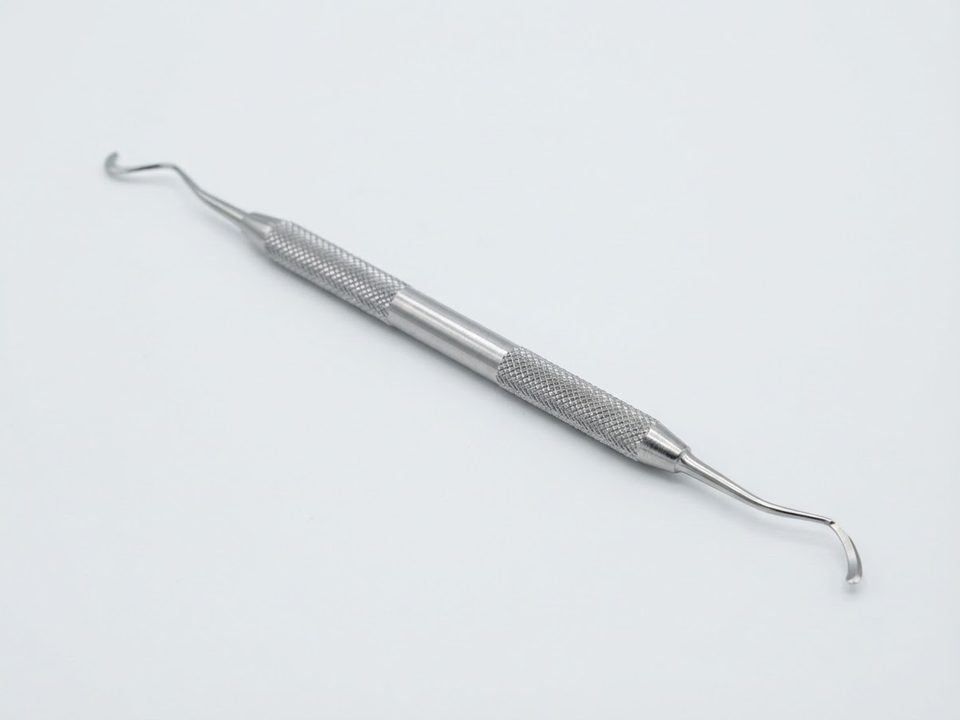
Periodontal curette (Gracey)

What it is

A hand instrument with a rounded toe and one cutting edge that reaches below the gum to clean calculus off the root surface — the tool of "deep cleaning" (scaling and root planing).

What it feels like

Usually done under local anaesthetic, one quadrant at a time; sore gums and sensitivity for 1–3 days afterwards are normal.

Original AI-generated educational illustration (not a photograph); shape checked against reference instruments by the site owner · 2026-10-23 Source: Cochrane 2022: Treatment of periodontitis for glycaemic control in people with diabetes

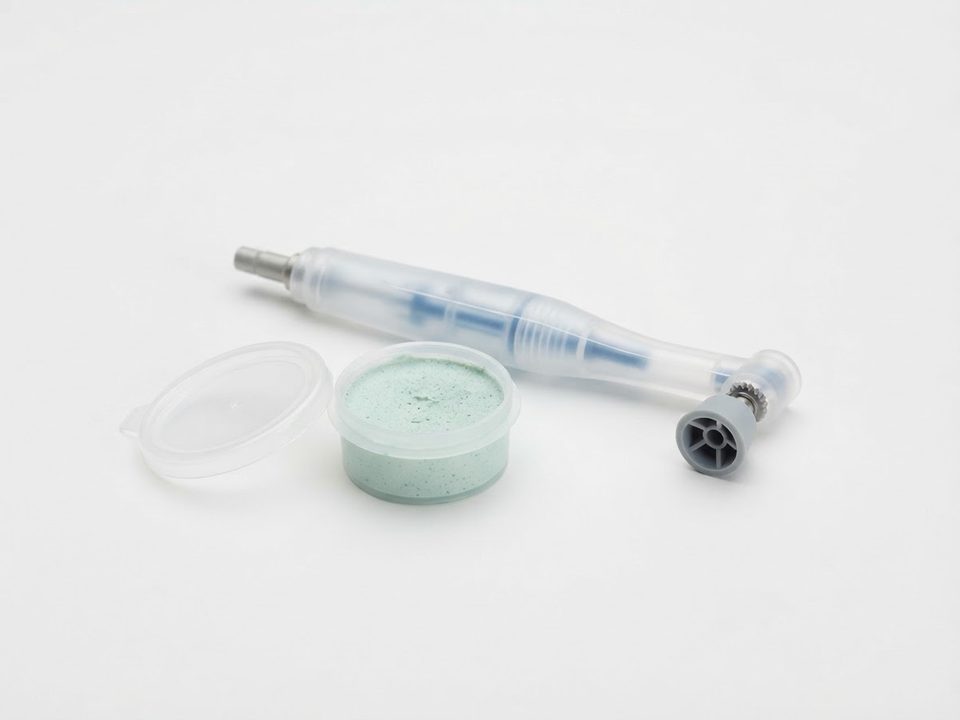
Illustration of a disposable prophy angle with rubber cup and a single-dose tub of prophy pasteOriginal illustration

Prophy cup and paste

What it is

A small rubber cup on a slow handpiece with fluoride-containing paste polishes the tooth surface and removes stains.

What it feels like

Feels like an electric toothbrush; mint or fruit flavour.

Original AI-generated educational illustration (not a photograph); shape checked against reference instruments by the site owner · 2026-10-23

Dental floss and interdental brushesImage verified

Dental floss and interdental brushes

What it is

Not clinic-only instruments, but the tools dentists teach most: floss for tight contacts, interdental brushes for open spaces or where gums have receded.

What it feels like

Interdental brushes must fit (go in with slight resistance); initial bleeding usually settles within 1–2 weeks.

Public domain · Karam.Anthony.K · Wikimedia Commons

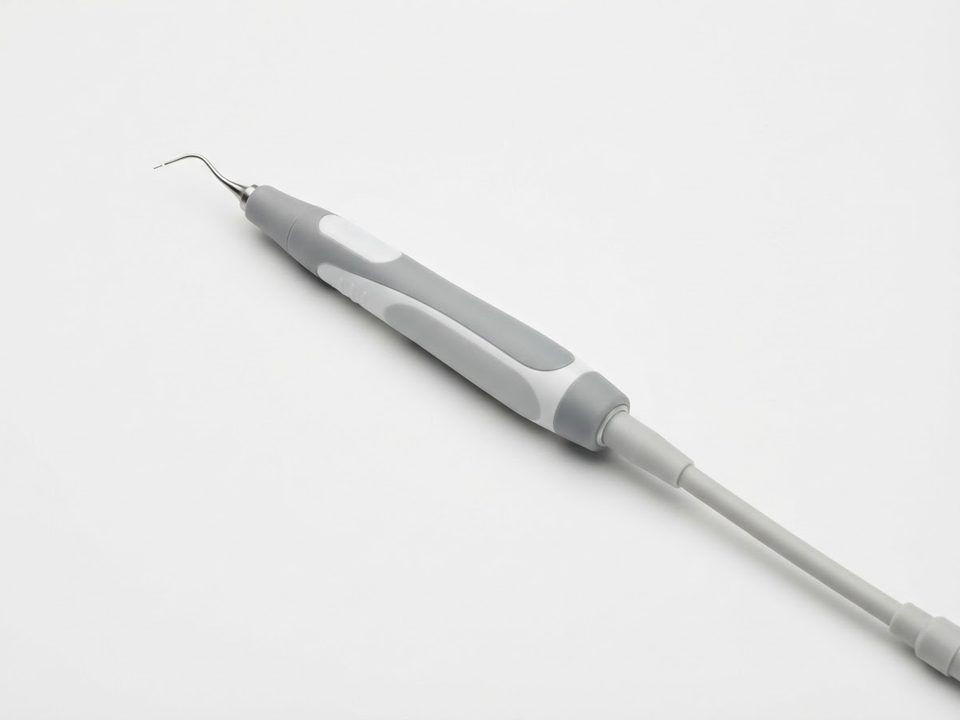
Illustration of an ultrasonic scaler handpiece: slim body with thin curved metal tip and water lineOriginal illustration

Ultrasonic scaler

What it is

The tip vibrates tens of thousands of times a second while spraying water, shattering and flushing away calculus. The main scaling tool in most clinics.

What it feels like

Lots of water, a high-pitched sound and sometimes sensitivity; you can ask for lower power or local anaesthetic. Tell staff if you have a pacemaker (most modern devices are unaffected, but it should be checked).

Original AI-generated educational illustration (not a photograph); shape checked against reference instruments by the site owner · 2026-10-23 Source: Cochrane 2018: Routine scale and polish for periodontal health in adults

Fillings & restorative (8)

High-speed and low-speed handpieces (dental drill)Image verified

High-speed and low-speed handpieces (dental drill)

What it is

The high-speed handpiece spins a bur at hundreds of thousands of rpm with a water spray to remove decay and shape the tooth; the low-speed one is for polishing and fine work.

What it feels like

High-pitched sound, vibration and water; local anaesthetic is usually given first. The sensation "in the nerve" is usually transmitted vibration, not damage.

CC BY 4.0 · Kaltpressen · Wikimedia Commons

Spoon excavatorImage verified

Spoon excavator

What it is

A hand instrument with small spoon-shaped ends that scoops out softened decayed dentine by hand, sparing more healthy tooth than a bur.

What it feels like

Mild pressure; deep decay may be sensitive.

Public domain · Cleveland Dental Manufacturing Co · Wikimedia Commons

Curing lightImage verified

Curing light

What it is

A blue light (about 450 nm) shone for 10–40 seconds hardens composite resin fillings.

What it feels like

Slight warmth is possible; the assistant uses an orange shield — do not stare at the blue light.

CC BY 3.0 · Niomno · Wikimedia Commons

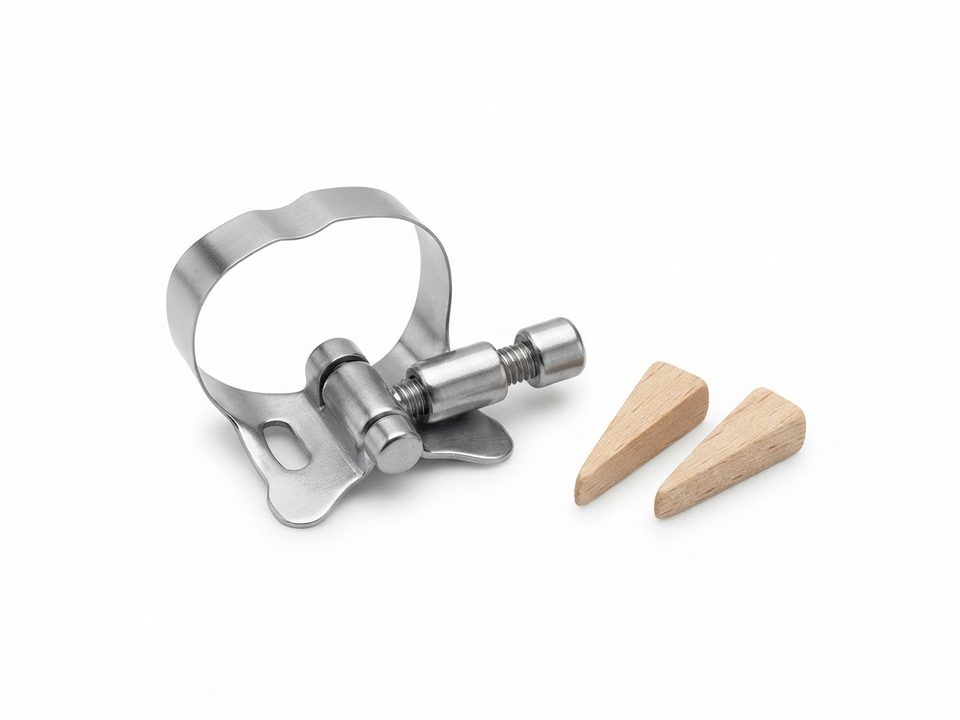
Illustration of a matrix band in a Tofflemire retainer with two wooden interdental wedgesOriginal illustration

Matrix band and wedge

What it is

A thin metal or plastic band wraps the side of the tooth, with a small wedge pressed between teeth, so the filling can be shaped with a proper side wall.

What it feels like

The wedge gives a pushing-apart feeling between teeth; it is removed within minutes.

Original AI-generated educational illustration (not a photograph); shape checked against reference instruments by the site owner · 2026-10-23

Articulating paperImage verified

Articulating paper

What it is

Thin coloured paper; biting on it marks "high spots" on a filling or crown so the dentist can adjust them.

What it feels like

If a new filling feels "high" when you bite, coming back for adjustment is routine.

Public domain · Union Broach Company, Incorporated · Wikimedia Commons

Rubber damImage verified

Rubber dam

What it is

A rubber sheet fitted over the tooth being treated to keep saliva and the tongue away. Common in root canal and composite work; it improves outcomes and stops instruments or chemicals falling into the throat.

What it feels like

You breathe through your nose with the mouth open; mention a blocked nose beforehand. Tell staff about latex allergy (non-latex sheets exist).

CC BY 2.0 · inga · Wikimedia Commons

Illustration of a bendable saliva ejector beside a wider high-volume evacuator tipOriginal illustration

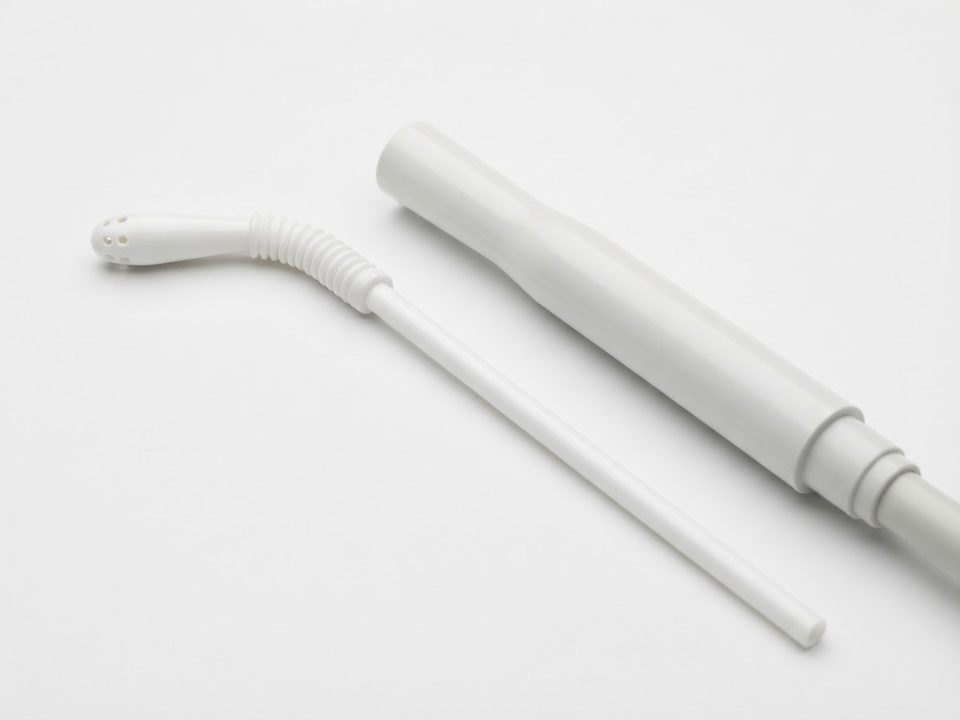
Saliva ejector and high-volume suction

What it is

A thin tube hooked at the corner of the mouth removes saliva; the wide tube held by the assistant removes the water spray from drilling.

What it feels like

Mild suction on soft tissue; raise your hand if there is too much water.

Original AI-generated educational illustration (not a photograph); shape checked against reference instruments by the site owner · 2026-10-23

Dental burImage verified

Dental bur

What it is

Small cutting tips mounted in the high- or low-speed handpiece, made of diamond grit or tungsten carbide in round, tapered or flame shapes, used to remove decay, shape teeth for crowns and cut restorations. Sterilised or discarded after each patient.

What it feels like

A high-pitched whine and water spray at high speed; raise your hand if it twinges.

CC BY 2.5 · No machine-readable author provided. Xauxa assumed (based on · Wikimedia Commons
Source: ADA — Dental drills (MouthHealthy)

Anaesthesia, extraction, endodontics, implants (6)

Dental anaesthetic syringeImage verified

Dental anaesthetic syringe

What it is

A metal syringe loaded with a 1.7–1.8 mL cartridge (usually lidocaine or articaine with adrenaline) and a very fine needle. Topical gel is often applied first.

What it feels like Kidney patients

A pin-prick and pressure for a few seconds; numbness lasts 2–4 hours — do not bite your lip or cheek. Kidney patients: standard dental doses of local anaesthetic are safe in dialysis and transplant patients; tell the dentist your medicines (anticoagulants, immunosuppressants).

CC BY 4.0 · unknown · Wikimedia Commons
Source: Beyond CKD:透析與移植腎友牙科清單(本站文章,引 KDIGO/AAOMS 來源)

Extraction forcepsImage verified

Extraction forceps

What it is

Forceps shaped for each tooth position grip the root below the crown; slow rocking widens the socket before the tooth is lifted out.

What it feels like Kidney patients

After anaesthetic you feel pushing, pressure and sounds, not sharp pain — raise your hand if it hurts. Kidney patients: schedule extractions on non-dialysis days and disclose anticoagulants and any bisphosphonate/denosumab history.

Public domain · Cleveland Dental Manufacturing Co · Wikimedia Commons
Source: AAOMS Position Paper on MRONJ — 2022 Update

Dental elevatorImage verified

Dental elevator

What it is

Like a small screwdriver, it is placed between tooth and bone as a lever to loosen the tooth; often used for broken roots and wisdom teeth.

What it feels like

Strong pressure and "click" sounds are normal.

Public domain · unknown · Wikimedia Commons

Endodontic filesImage verified

Endodontic files

What it is

Very fine hand or motor-driven files, numbered by size, remove inflamed or dead pulp and shape the root canal before it is sealed with gutta-percha.

What it feels like

Under anaesthetic there is mostly a light touch; 1–3 visits are typical and biting tenderness for 2–3 days afterwards is common.

Public domain · DRosenbach at en.Wikipedia · Wikimedia Commons

Dental implant fixtureImage verified

Dental implant fixture

What it is

A titanium screw-shaped fixture is placed in the jawbone; after 3–6 months of osseointegration an abutment and crown are attached.

What it feels like

Local anaesthetic on the day; swelling for 2–3 days. Kidney and diabetes patients: blood sugar and bone metabolism affect success; anyone on bisphosphonates/denosumab needs MRONJ risk assessment first.

CC BY 4.0 · DrKemena · Wikimedia Commons
Source: Beyond CKD:植牙成功率、風險與需要特別小心的人(本站文章)

Electronic apex locatorImage verified

Electronic apex locator

What it is

An electronic device that measures root-canal length during endodontic treatment: one lead clips to the file, the other hooks on the lip, and impedance changes show when the file tip reaches the root apex, reducing the number of X-rays needed.

What it feels like

Painless — just a small hook on your lip and beeps from the device.

Public domain · Arkrishna · Wikimedia Commons
Source: AAE — Root canal treatment (patient page)

Prosthodontics & orthodontics (3)

Impression tray and materialImage verified

Impression tray and material

What it is

A horseshoe tray filled with silicone or alginate is held in the mouth for 2–5 minutes to set, producing a model for crowns, dentures or aligners. Many clinics now use intraoral scanners instead.

What it feels like

Gagging is common: sit upright, tilt your head down, breathe slowly through the nose and wiggle your toes — it helps.

CC BY 4.0 · Dentina54 · Wikimedia Commons

Orthodontic brackets and archwireImage verified

Orthodontic brackets and archwire

What it is

Small brackets bonded to the teeth are linked by an archwire that applies force to move teeth; clear aligners are an alternative.

What it feels like

Soreness for 2–3 days after adjustments; use orthodontic wax where brackets rub. Orthodontics should not start until periodontal disease is controlled.

Public domain · أرسان عادل البياتي at Arabic Wikipedia · Wikimedia Commons

Intraoral scannerImage verified

Intraoral scanner

What it is

A handheld optical device that scans teeth and gums to build a 3D digital model, replacing some conventional impressions for crowns, bridges, orthodontics and implant planning.

What it feels like

Like a camera the size of an electric toothbrush moving around your mouth — no gag-inducing impression material.

Public domain · ADOEDO · Wikimedia Commons
Source: Beyond CKD — 牙科器械圖鑑(本頁)

All images are from Wikimedia Commons under CC0, public domain or CC BY; click an image to see the full licence and author on the original page.