Medications across time zones, documents, finding care at your destination, pacing your itinerary and knowing what to do if you feel unwell — a step-by-step travel checklist for people living with kidney disease, diabetes, heart disease or any long-term condition.
目錄
- 1. Four to eight weeks before: talk to your care team
- 2. Medications: more than you need, in more than one place
- 3. Crossing time zones with timed medication
- 4. Know where care is before you need it
- 5. Transport, accommodation and pacing
- 6. If you feel unwell while travelling
- 7. The night-before list
- Summary
- References
Affiliate disclosure: Some travel links on this page are affiliate links. We may earn a commission from qualifying bookings, at no additional cost to you. Our travel-planning tools on this site are free and do not require any booking. See our Affiliate Disclosure.
Living with a long-term condition does not mean giving up travel. It does mean that the boring part — planning — carries more weight. Most problems people report from trips (running out of medication, a lost prescription, not knowing where the nearest clinic is) are preventable with a few hours of preparation.
This checklist is written for anyone with a chronic condition. Where kidney disease, dialysis or transplant need something specific, we say so.
1. Four to eight weeks before: talk to your care team
- Tell your doctor or nurse about the trip — destination, dates, altitude, climate, and how active you plan to be. Ask whether anything about your condition makes the plan unwise, and whether any routine tests or vaccinations should be done first.
- Ask for a written medical summary: diagnoses, current medications with generic names and doses, allergies, recent key results, your clinic's contact details. One page is enough. Our free Medical Passport tool produces exactly this in several languages.
- Transplant recipients: ask about live vaccines (generally avoided) and whether your destination carries infection risks that need extra precautions.
- Dialysis patients: holiday dialysis must be booked weeks ahead. Your unit will need to send your treatment prescription and recent blood results to the host unit. Start with our Pre-booking Dialysis Clinic Map and the Travel Dialysis Directory.
- People with diabetes: discuss how to adjust insulin or other medication timing across time zones (see section 3).
2. Medications: more than you need, in more than one place
- Take at least 1.5× the days you will be away, split between carry-on and a companion's bag or checked luggage. Never put all of your medication in checked baggage.
- Keep medicines in original pharmacy packaging with the label showing your name. This avoids questions at borders and helps a foreign pharmacist identify what you take.
- Carry a printed medication list with generic (not only brand) names — brand names differ between countries.
- Check the destination's import rules for controlled substances (some pain medications, sedatives, ADHD medication) and for quantities. Embassy websites and the International Narcotics Control Board country list are the places to start.
- Temperature-sensitive medicines (insulin, some injectables, erythropoietin) need an insulated pouch; ask your pharmacist about how long they tolerate room temperature.
- Prescriptions: carry a copy. Some countries will only dispense against a local prescription, but a copy still helps a doctor there write one.
- Anti-rejection medication: a missed dose matters. Set phone alarms on the new local schedule the day you arrive (see our article on drug and food interactions after transplant for what to avoid while travelling).
3. Crossing time zones with timed medication
Medicines taken once a day usually tolerate shifting gradually: move the dose by 1–2 hours each day toward the new local time, or simply pick a convenient local time and keep the interval between doses no shorter than about 20 hours for a once-daily drug.
Medicines with narrow timing — insulin, anti-rejection drugs, some heart medications, anticonvulsants — need a plan agreed in advance with your prescriber or pharmacist. Write the plan down with actual clock times for each day of transition. A simple method many clinics suggest: stay on home time for the flight day, then switch to local time on the first full day, adjusting any dose that would fall less than half the normal interval after the previous one.
4. Know where care is before you need it
- Find the nearest hospital with an emergency department to each place you will stay. Save its address in your phone's map app offline.
- For dialysis: confirm the host unit in writing, with session days and times, and ask what to bring (recent blood results, hepatitis status, medication list).
- Travel insurance assistance line: if you have insurance, save the 24-hour number and your policy number in your phone and on paper.
- Local emergency number: it is not 911 everywhere. Look it up for every country you will enter.
- Pharmacy opening hours and prescription rules differ. In many countries, pharmacists can advise on minor problems.
- Language: our Medical Phrase Cards cover common clinic situations in several languages, including "I have kidney disease", "I take immunosuppressants", and "Where is the nearest hospital?".
- Check current advisories for your destination — natural hazards, disease outbreaks, and official travel advice. Our Travel Hub shows a live hazard map and advisory summary, and the Risk Center lets you check a country for your travel dates.
5. Transport, accommodation and pacing
- Flights: when searching, compare total journey time, not only price — a long layover can be harder on your body than a slightly more expensive direct flight. Our Travel Hub has a flight-search shortcut; where this site uses partner booking links, they are marked, and you are free to book anywhere.
- Seat and movement: on long flights, walk every hour or two and do ankle exercises; ask your doctor whether you need anything extra to reduce clot risk.
- Fluids on the plane: people with fluid limits (dialysis, heart failure) should plan their allowance for the flight; others should drink regularly, as cabin air is very dry.
- Accommodation: a room with a refrigerator (for medicines), a lift if stairs are hard, and proximity to the clinic if you will have treatment. Check these before booking rather than hoping.
- Itinerary: plan one main activity per day with rest built in, especially on the first two days. A flexible plan survives a bad day; a packed one does not. Our free Trip Planner can lay out days and — for dialysis patients — automatically blocks out session times.
- Food: research before you go rather than at the restaurant. Our guide to dining out and travel food covers how to ask about ingredients.
6. If you feel unwell while travelling
Decide before you leave what you will do in each situation, and write it on the same page as your medical summary:
- Minor symptoms (a cold, mild stomach upset): rest, fluids within your allowance, and your usual rules for sick days. Know which of your medicines your doctor has told you to pause when you cannot eat or drink normally (for example, some blood-pressure and diabetes medications).
- Missed dialysis or missed anti-rejection doses: contact your home unit and the local clinic the same day — do not wait until you get home.
- Red flags needing urgent care: chest pain, severe breathlessness, confusion, fever with a transplant or on immunosuppression, inability to keep medication down, no urine for many hours (if you normally pass urine), signs of a stroke. Go to the emergency department you identified in section 4, and call your insurer's assistance line.
- Keep your medical summary visible — the first thing a foreign clinician needs is your medication list and diagnoses.
7. The night-before list
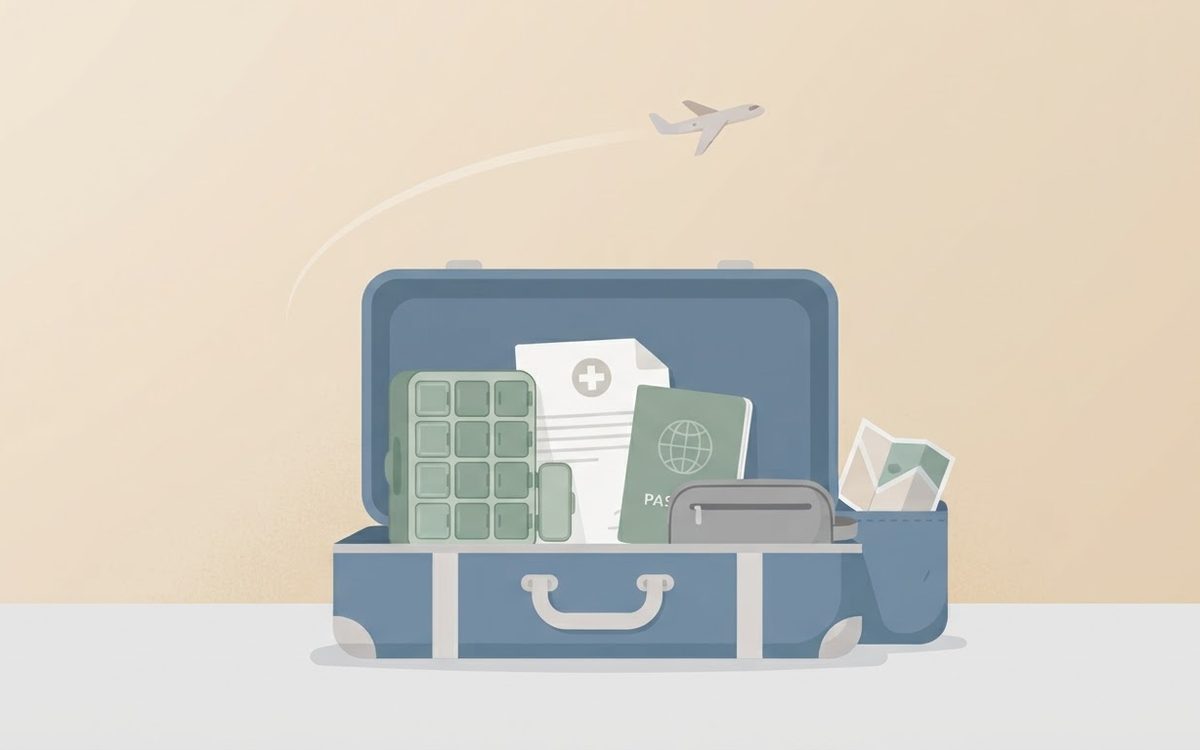
- Medications (1.5×, split, original packaging) and the printed list
- Medical summary / Medical Passport, insurance card and policy number, prescriptions
- Phone with offline maps, emergency numbers, clinic addresses saved
- Insulated pouch and spare batteries/charger for any medical device
- Snacks suitable for your diet for the journey
- A copy of your dialysis booking confirmation (if applicable)
- Your Patient Travel Kit checklist, ticked off
Summary
- Involve your care team weeks ahead; get a one-page medical summary.
- Carry extra medication, split up, in original packaging, with a list using generic names.
- Agree a written time-zone plan for timed medicines.
- Identify hospitals, dialysis units, insurance lines and emergency numbers before departure.
- Pace the itinerary and choose accommodation that fits your needs.
- Decide in advance what you will do if you feel unwell.
References
- U.S. Centers for Disease Control and Prevention. Travelers with Chronic Illnesses. CDC Yellow Book. https://wwwnc.cdc.gov/travel/yellowbook/2024/additional-considerations/travelers-with-chronic-illnesses
- World Health Organization. International travel and health. https://www.who.int/health-topics/travel-and-health
- International Narcotics Control Board. Travellers — country regulations for travellers carrying medicines. https://www.incb.org/incb/en/travellers/country-regulations.html
- National Kidney Foundation. Travel Tips for Dialysis Patients. https://www.kidney.org/atoz/content/traveltip
- Diabetes UK. Travelling with diabetes. https://www.diabetes.org.uk/guide-to-diabetes/life-with-diabetes/travel
This article is general health information from a patient-run site and does not replace advice from your own doctor, nurse or pharmacist.
下一步
相關知識